Showing posts with label productivity. Show all posts

Wednesday, April 19, 2017

Plan Every Day in Advance

What a fantastic guest blogger I have today. Brian Tracy has been a huge influence to so
many people in achieving personal and business goals. His 3rd edition (out this week) of Eat That Frog is just one part of that mold. Here's a great book that's going to help you to stop that procrastinating. Admit it. We all do it. With Brian's book, with 2 new chapters, you'll learn that you don't need to do everything to be successful and that in trying to you lose focus and begin to drop the ball. Share this book with your entire team.

Plan Every Day in Advance
By Brian Tracy

The following post is an excerpt from chapter 2 of Eat That Frog.
A word about frogs… It has been said that if the first thing you do each morning is to eat a live frog, you can go through the day with the satisfaction of knowing that that is probably the worst thing that is going to happen to you all day long. Your “frog” is your biggest, most important task, the one you are most likely to procrastinate on if you don’t do something about it. It is also the one task that can have the greatest positive impact on your life and results at the moment.

Plan Every Day in Advance
You have heard the old question, “How do you eat an elephant?” The answer is “One bite at a time!”
How do you eat your biggest, ugliest frog? The same way: you break it down into specific step-by-step activities and then you start on the first one.

Your mind, your ability to think, plan, and decide, is your most powerful tool for overcoming procrastination and increasing your productivity. Your ability to set goals, make plans, and take action on them determines the course of your life. The very act of thinking and planning unlocks your mental powers, triggers your creativity, and increases your mental and physical energies.
Conversely, as Alec Mackenzie wrote, “Taking action without thinking things through is a prime source of problems.”

Your ability to make good plans before you act is a measure of your overall competence. The better the plan you have, the easier it is for you to overcome procrastination, to get started, to eat your frog, and then to keep going.

One of your top goals at work should be to get the highest possible return on your investment of your mental, emotional, and physical energy. The good news is that every minute spent in planning saves as many as ten minutes in execution. It takes only about 10 to 12 minutes for you to plan your day, but this small investment of time will save you up to two hours (100 to 120 minutes) in wasted time and diffuse effort throughout the day.

You may have heard of the Six-P Formula. It says, “Proper Prior Planning Prevents Poor Performance.”

When you consider how helpful planning can be in increasing your productivity and performance, it is amazing how few people practice it every single day. And planning is really quite simple to do. All you need is a piece of paper and a pen. The most sophisticated Outlook system, computer app, or time planner is based on the same principle. It is based on your sitting down and making a list of everything you have to do before you begin.

One of the most important rules of personal effectiveness is the 10/90 Rule. This rule says that the first 10 percent of time that you spend planning and organizing your work before you begin will save you as much as 90 percent of the time in getting the job done once you get started. You only have to try this rule once to prove it to yourself.

When you plan each day in advance, you will find it much easier to get going and to keep going. The work will go faster and smoother than ever before. You will feel more powerful and competent. You will get more done faster than you thought possible. Eventually, you will become unstoppable.


Brian Tracy is one of the top business speakers in the world today. He has designed and presented seminars for more than 1,000 large companies and more than 10,000 small and medium- sized enterprises in 75 countries on the subjects of Leadership, Management, Professional Selling, Business Model Reinvention, and Profit Improvement. He has addressed more than 5,000,000 people in more than 5,000 talks and presentations worldwide. He currently speaks to 250,000 people per year. His fast-moving, entertaining video-based training programs are taught in 38 countries.

In addition to Eat That Frog, Brian has written more than 80 books that have been translated into 42 languages, including Kiss That Frog!, Find Your Balance Point, Goals!, Flight Plan, Maximum Achievement, No Excuses!, Advanced Selling Strategies, and How the Best Leaders Lead. He is happily married, with four children and five grandchildren. He is the president of Brian Tracy International and lives in Solana Beach, California. He can be reached at briantracy@briantracy.com.

Wednesday, April 27, 2016

Get Up and DO

It's so easy to get into a rut. Especially when you're in between jobs. The worst
thing that you can do is sit and wait. But sitting at a computer, day after day, applying for jobs is not going to get you by. You have to be more active.

Sitting and waiting for something to happen is going to weaken you. It will weaken your skills, your knowledge, your ability to interact socially, and most of all your motivation. You have to get up and get moving.

I'm currently in between jobs and was falling down that hole. I did two things to help me stay towards the top, allowing me to feel better about myself and my outlook of things to come. The first is volunteering.

Volunteering is actually good for you. It provides physical and mental rewards. It helps you gain other types of professional experience. And the biggie - YOU make a difference.

The other thing I did was . . . I got a job. It isn't the type of work I'm looking for, nor making the money I need, or even has the possibility of continuing. But it is pulling in some money and keeping me busy. Plus I'm able to help out a friend (grateful to that friend). Cleaning boats is not a career choice, but it's keeping my mindset in the work world. It also shows me how lucky I am to be here and reminds me of the successes I've had.

So if you're out of wack and in that rut, get out and DO. It's quite the pick me up.

Monday, March 14, 2016

Under New Management

Times and technology are always changing. With these changes must come
process and management style changes. The problem is, that what we need to do to keep up doesn’t always happen. A new idea here and there is too slow and dispersed.

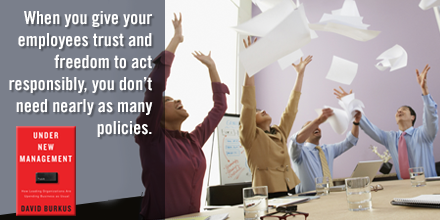
A number of things that I see in David Burkus’s new book, Under Management: How Leading Organizations Are Upending Business as Usual, I’ve seen before. But what’s great about it is that he gathers these things - and much more - shows great examples, and puts them into one easy to read, understand, and implement reference.

Including research and case studies, Burkus presents examples of organizations that have successfully implemented each of these practices. Zappos paying people to quit. Whole Foods hiring as a team. Wegmans putting customers first. Adobe eliminating yearly performance appraisals. McKinsey & Company celebrating employee departures (and keeping contact).

This is the book to read if you’re ready to make a positive change in your organization or even if you’re just starting out and building from scratch. Leave the past in the past. Let go of the old ineffective methodologies. Create an organization that will provide the base for success.

Friday, January 15, 2016

The 3 Gaps

I knew there was going to be something special about the new book, The 3 Gaps: Are You Making a Difference?, by Hyrum W. Smith, once I realized that he was one of the original co-founders of Franklin Covey.  I surely wasn’t disappointed.


Just reading a short description of each of the 3 gaps was an indication that I needed to read this book.  Unless you actually sit down and realize what these gaps are, and how big they are, you’ll never live up to your potential.  Without action, the gaps will stay open.


Within each chapter are personal accounts from people throughout Hyrum’s life that drive the messages home.  The Beliefs Gap shows the difference between what we believe is true and what actually is.  The Values Gap shows the difference between what we most value and what we actually do.  The Time Gap shows the difference between what we plan on doing and what we actually do.  It sounds so simple, but we all have gaps that need help closing.  I can see it in myself, in my friends, and in the people I work with.

We constantly hear people saying they want inner peace.  Here’s your chance. This is a book that everyone should read as a guide to managing ourselves to be our very best.  It would be a great book to add to book club or to share with others.

Monday, October 12, 2015

Collaboration Begins with You

If there’s one thing I’ve learned about reviewing books, it’s don’t miss a Ken Blanchard book.
 Collaboration Begins with You: Be a Silo Buster, is no different.  This new book by Ken, Jane Ripley, and Eunice Parisi-Carew is a book for every employee.  We shouldn’t wait for a culture of collaboration to begin from the top.  It begins with you.

The authors share a parable - which makes it an easy read for everyone - on the three-part approach to busting silos around you; the heart, the head, and the hands.  Put it all together and it provides a way for us to change our beliefs of collaboration so that we can truly work together instead of just going through the motions.  In order for collaboration to really work properly, it needs to become company-wide . . . and accepted.

So you think you, or your organization, are already collaborative.  Try the self-assessment towards the end of the book.  You may soon feel a bit different about those thoughts.  It’s easy for organizations to fall into the beliefs of how good they think they are.  But once you actually, honestly look at the Heart, Head, and Hands domains of collaboration, you might very well see that, Hmm, we have some work to do.

This book will show you how to break down the barriers and get started, instead of waiting for it to filter down.  The outcome?  A collaborative mindset leading to increased trust and productivity.

Wednesday, October 7, 2015

Flip Flops in the Office

I was talking to a friend of mine the other day about things his manager does that drives
him nuts (many).  The one issue that really struck a cord was flip flopping.

I've had a couple of managers throughout my working years that were pros at flip flopping. Whether it was making changes to a new SOP and eventually flipping right back to the way it was originally written, or telling me to do one thing and then completely going off when it's being done.  

Now don't get me wrong.  There's nothing wrong with changing your mind.  Things change. Circumstances change.  I totally expect it.  But to be a good and trusted leader, you must take the time to think things through.  Knee jerk reactions have a bad habit of coming back on you.  People start to wonder what the interpretation of the day is.  You may think it doesn't affect you, but it affects your team and the way they do their jobs and the way they think about you, whether positively or negatively.  Flip-flopping will eventually lead to people throwing up their arms and giving up and negatively impacting the culture.  Then everyone's productivity goes down.

I think a lot of it comes down to time management.  Throughout the last 20 years or so I can't even count the number of times I've heard how "busy" people are, and that's their excuse for not reacting or thinking through.  Everyone is busy, but time is an important factor in good leadership.  You have to make the time.  Leaders are role models, whether that means good ones or bad ones.  The easier you make your teams job, the easier you're going to make your job.

Tuesday, August 18, 2015

The Genius of Opposites

Opposites attract, right?  Sometimes in better ways than others.  Understand how introverts and extroverts can
work together and you’ve got a winning team.  We know that opposites have differences . . . duh.  The key is to understand what those differences are and enrich those different skills to understand and appreciate the other.


Jennifer Kahnweiler’s new book, The Genius of Opposites: How Introverts and Extroverts Achieve Extraordinary Results Together, shows us how to work, together, with someone who is our opposite.  This is a five-step plan to grow a cohesive partnership.  Conflict can be a good thing and Jennifer uses some excellent examples of famous opposites to explain.

Being an introvert myself, I found this book compelling and strengthening.  With the information, examples, tools, and techniques included in this book, it would make a great series of lunch and learns for your leaders and team members.


I'm pleased to have Jennifer Kahnweiler as my guest blogger today.

Email: a Multiplier of Misunderstandings?


When was the last time you came back to your office and listened to 100 voicemails?  More likely you responded to the many emails in your inbox.

I reached my saturation point a few weeks ago after I realized that I had not one live conversation all day.  That is an energy drain for an extrovert.  The real tipping point came during a back and forth email dialogue with an introverted work colleague.

As our email tennis match proceeded, I could see the misunderstandings multiply.  I wrote him an email to ask for a five minute phone call to clear up the issue.  He wrote back, asking me if we could “settle it on email”.  “No way,” I thought.  “It would take more time to write each other again that it will to talk.”

So, a bit nervously, I picked up the phone and dialed his number anyway.  We had a brief conversation in which he explained his position and we discussed several viable options.  The matter was resolved in four minutes.
I know that, as an introvert, he prefers to communicate via email.  As an extrovert, I agree — most of our communication can be handled that way.  I also believe that a personality preference is not a prescription for every situation.  There are times when we need to be able to ask each other questions, dig a little deeper, and listen to a person’s voice tone to better understand their point of view.  We also need to clearly express what we mean.

To what degree should the situation drive the communication mode?  How much do you moderate your preferred style to accommodate others?


Originally published 2/6//2009 on JenniferKahnweiler.com.
Jennifer B. Kahnweiler, Ph.D., Certified Speaking Professional, is a bestselling author and global keynote speaker known as the “champion for introverts.” In addition to her latest book, The Genius of Opposites, she has written two bestselling books about introverts (Quiet Influence and The Introverted Leader), which have been translated into 14 languages.

Monday, May 11, 2015

A Tuna Sandwich Named Kevin

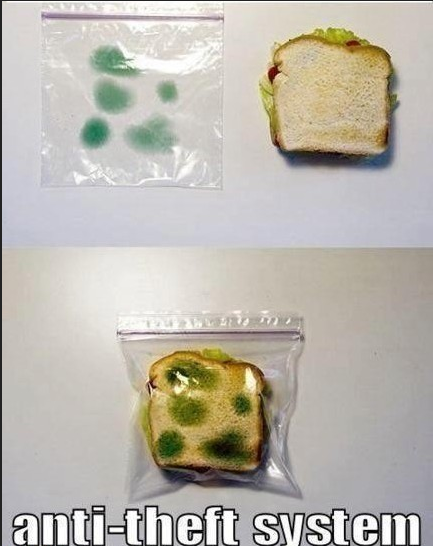
I just recently saw one of those cute little sayings on Facebook that said, “Strange new trend at the
office. People putting names on food in the company fridge. Today I had a tuna sandwich named Kevin”.
As funny as that sounds, it’s actually pretty accurate. And that’s not so funny. Whether it’s a sandwich, an employee or personal space in the “cube farm”, R-E-S-P-E-C-T seems to be often missing. With a lack of respect comes a lack of trust. With a lack of trust comes an unproductive office. Oh yes, creativity also takes a hit.

Did I mention that teamwork suffers, as does enthusiasm and commitment to the organization? Let's not forget that customer service suffers. Motivation decreases, and so does communication.

Seems to be a trend here. Instead of having to deal with all of these negatives, why not show some respect for your employees and colleagues and turn those negatives into positives?

Wednesday, May 6, 2015

The NEW One Minute Manager


today’s
leaders.  It doesn’t matter if you read the original or not, you’re going to want to catch up with the new updated edition.  The underlying principles remain the same, however the book describes how effective leadership is now based more on side-by-side relationships instead of the dying top-down interpretation.


The One Minute Manager has been a staple on any leadership book list since 1982, and the revised edition is going to ensure that it stays there.  A lot has changed, technologically and professionally, since the ‘80’s, so it just makes sense that “One Minute” changes.

The three “secrets” of,
  • One Minute Goals - keep them front and center
  • One Minute Praisings - be honest
  • One Minute Re-Directs (formerly Reprimand) - for the learner (which we all should be)
have been updated, to make huge differences for a new generation of leaders.

There are so many quotes in this book that will become classic all over again.  “Never punish a learner - re-direct their behavior.”  “The best minute I spend is the one I invest in people.”

The book is still an easy 100 page read, so take advantage of an afternoon to make a difference for yourself and for those you lead.  One minute really CAN make a difference.

Tuesday, April 7, 2015

Chess Not Checkers

A book worth the wait with no disappointment.  I’m talking about Mark Miller’s new book, Chess Not
Checkers: Elevate Your Leadership Game.  There are a handful of authors that I look forward to new books from, and Mark is definitely in that class.

Blake Brown is back in this easy to read, easy to follow, hard to put down story about learning how to go from the “fun, highly reactionary game” of leadership checkers to the strategy, unique abilities, and heightened focus of leadership chess.  Mark’s leadership experience and knowledge shines through as I find myself nodding my head up and down as I read these intuitive concepts.  I can tell that he’s been there and done that, and that’s a big draw to any of his books.  Most of us can only dream about having mentors like the story’s Debbie and Jack.  Now we can, at least on paper.

There are so many lessons to be learned that I couldn’t even begin to speak in depth to them.  You just need to pick up a copy (and extra’s for your team) and find out for yourself.

Tuesday, March 24, 2015

Trial to Prevent Error

This is a lesson about finding out the hard way.  I had the brilliant idea to record a computer training session on WebEx and then convert it to .mov or .wmv to import intoCamtasia for editing.  Seemed like a pretty easy process.  Except it didn’t work!
                        
After multiple attempts at converting, with the WebEx converter, I decided to look up the issue on online forums.  I didn’t see anything positive.  I then asked a couple of people I work with if they had ever tried to convert WebEx video.  They had . . . and it didn’t work.

Now this isn’t meant to be a WebEx bashing session, but if I had tested it out first, I would have realized that I should have recorded right to Camtasia instead of trying to convert the WebEx recording.  I could have saved myself a lot of time AND rework.  Now I have to go back and have the person who performed the training do it all over again.


Not a great outcome, but a great lesson in making sure that I try new things out ahead of time, no matter how good it sounds.

Wednesday, January 7, 2015

I Love a Spicy Meatball

Yes, I love a spicy meatball . . . and wings, and dips, and pizza.  But they sometimes rub 
me the wrong way, if you get my drift.  Spicy is good.  Too spicy is bad.

Kind of like people.  You've heard the saying, "If you're the smartest person in the room, you're in the wrong room".  Don't be the equalizer.  You've got to add some spice to the room.  But you can't just do it randomly.  Just like spicy foods, if someone on the team is too spicy, you're going to have problems.

A good spicy team member is going to communicate, share openly and willingly, question ideas/decisions, and be honest and straight forward.  But to keep from becoming too spicy, he/she's also going to actively treat others with respect and be supportive.

You don't want all yes wo/men on your teams.  You'll never improve to the degree that you need to keep up.  Spicy people are a key.  You need people to keep things active and to keep everyone's minds flowing and thinking.  The first idea isn't always the best.  In fact, it usually isn't.  You need quality discussion.

Walt Disney once said that, "Ideas come from curiosity".  When setting up teams, take care to really look at everyone you're considering.  You need people that exhibit curiosity.  Spice it up a bit and get a good mix.  A good mix equals good results.

Wednesday, October 1, 2014

Customer Service? But They're Co-Workers!


What all employee's need to realize is that INTERNAL customer service is just as important as external.  Everyone is a customer of someone else.  It's not rocket science.  Just think about these 3 simple factors to provide better quality service:
Respect:
Everyone has their job for a reason.  While all members of a team may not contribute equally, each is considered equally important.
When you give respect, you earn respect.

Interdependency:
It's not a one man show.  We can only truly succeed when our entire organization succeeds.
When you are there for someone, someone will be there for you.

Reciprocity:
“What goes around, comes around”.  Usually, this is used negatively.  With a winning team, it's in reference to mutual benefit and support.
When you're willing to give assistance, support, caring, and benefit of the doubt, you'll also receive the same in return.

 Give a little - gain a lot!

Monday, January 27, 2014

Keep One In Your Pocket

“We developed so many talents as we went along that I lay awake at night
figuring out how to use them. That's how we become so diversified. It was natural branching out." - Walt Disney
How many times have you had a great idea in the middle of the night or while sitting relaxing at the pool, beach, or back porch and told yourself, “I’ll write it down later”. How many times has “later” never come? I wish I had a nickel (or a dollar, to account for inflation) for every time I said that but forgotten the idea 15 minutes later.

Ideas, and thoughts on how to develop them, begin streaming when we’re relaxed - when we don’t have the stresses of phone calls, meetings, and people popping into our offices. And, because we’re not prepared, we lose many ideas. We have to be equipped for these instant concepts at all times.

That takes me back to my Navy days. I ALWAYS carried around one of those little green, government-issue memorandum books in my back pocket - constantly at the ready to record my thoughts or work schedule of the day. It was a great asset (and great application for CYA).

These days, that little green book has been replaced by a smart-phone. It can record thoughts just as easily and they can be converted directly to memos or emails.

Make sure you have the available means to record your instant thoughts and the next time you can’t sleep, at least be productive and pull out that “little green book”.

Wednesday, September 18, 2013

Help Them Grow - Revisited

From September 05, 2012 - This is the first year anniversary for Help Them Grow or Watch Them Grow, by Julie Winkle Giulioni and Beverly Kaye. STILL, a must read for all leaders.

It only happens every few years. I’m talking about leadership books that come out that I like so much that I read it with a highlighter. I use them in staff development and lend them out to others who want to improve themselves and/or their staff.

A few years back it was Creating Magic by Lee Cockerell. Then cameFrom Bud to Boss by Kevin Eikenberry and Guy Harris. Now – I've had the great privilege of reading a pre-launch copy of Help Them Grow or Watch Them Go: Career Conversations Employees Want by Beverly Kaye and Julie Winkle Giulioni.

Help Them Grow is the type of book that makes you think, “Hmm, why haven’t I been doing that?” It’s a straightforward roadmap on how to help your staff develop without you having to take control of the reins. Let your employees grab hold of those reins and become responsible for their own growth. Wow . . . what a concept, right? Can you see your time being freed up?

Kaye and Giulioni say that “your role is more about prompting, guiding, reflecting, exploring ideas, activating enthusiasm, and driving action”. This book shows you ways to incorporate these career conversations in your everyday work life.

Notice that last sentence that says “everyday”. Leaders don’t have time to hold extended annual appraisals that package up everything from the entire previous year – and shouldn’t – heck, they don’t remember about what you’re talking about half the time anyway! You’re already having everyday conversations with your employees (hopefully), so just change the tone a bit. You don’t need a bunch of checklists and forms. Conversations and asking questions are the keys to development.

This book gives you actionable steps to “focusing on what the employee needs to experience, know, learn, and be able to do”. Too often, leaders think they have to have all the answers (and they avoid the topic if they don’t), when what they actually need most are the questions, permitting the employee to be a first hand participant in their own successful development.

There’s so much more to this embracing book than I have time for here, so my suggestion to you is to go to Amazon to order yourself a copy or two – others are going to want their own.

Tuesday, January 22, 2013

The Outstanding Organization

These last couple of weeks I’ve had the pleasure of reading, The Outstanding Organization, by Karen Martin.  I’ll tell you what - every organization that’s trying to improve or going through anything like a merger or restructuring should be reading this book.

There have been NUMEROUS books written on performance improvement by numerous “experts”, but they’re all, in some way, very similar . . . lots of theories.

In, The Outstanding Organization, Karen Martin, in five chapters, explains the straight to the point, duh factor of how to succeed.  She says that chaos is the main underlying issue in failed improvement.  “Chaos sabotages your ability to provide value to your customers, satisfy shareholders, . . .”  “Left unchecked, chaos destroys everything that’s good about an organization.”  Too many times, organizations start to plan without looking enough at what’s already happening and jump into the fire too quickly.

Chapter One begins right where the book should - the fundamentals.  I’ve had a couple of friends who have “flipped” houses.  What do you think the first thing is that they look at when checking out new properties?  The foundation.  Without a good foundation in business, you’re going to hold onto chaos and be unable to develop any kind of consistency.

From there Martin goes into creating clarity - truth seeking and truth telling.  Without it causes a psychological drain on everyone involved.

I loved the section on the problem of lack of focus.  She calls this “organizational attention-deficit-disorder.”  There must be focus and a sense of discipline instilled in the organization in order to get over the hurdles.

And lastly is employee engagement.  People talk and talk and talk about it, but as Karen says, it’s “the single largest contributor to an organization’s success”.

This book is based on Martin’s extensive research and experience with a number of organizations.  She taught these organizations not to accept the chaos as a norm but to fall back to the fundamentals and open the curtains to improvement.

If you’re looking for some no-nonsense ways to get your organization on, or back on track, you need, The Outstanding Organization.


Author, speaker, and consultant, Karen Martin, provides practical strategies and tools for building an Outstanding Organization. The Outstanding Organization: Generate Business Results by Eliminating Chaos and Building the Foundation for Everyday Excellence is available at bookstores nationwide and on Amazon.

Wednesday, August 1, 2012

Account on This!

One of the biggest areas that I've seen lacking in leadership is keeping staff accountable.

One of the best ways that you can help people excell is to establish an accountability-based culture focused on producing results.  There are a number of basic things that you can do help this culture along, tremendously and quickly:
  • Establish goals and objectives . . . that align with the organization.
  • Assign each team members specific goals and objectives.
  • Find out from your team what they need in order to succeed in those goals and objectives.
  • Be a part of the team yourself.
and the biggie:
  • FOLLOW UP!
Many leaders actually do focus on those first four bullets . . . then they lose it all at the last one.  If you don't follow up, you're just going through the motions.  That's just a waste of everone's time, including the organization's.

Monday, May 21, 2012

Find Your Platform

Last week I reviewed a new book by my friend Michael Hyatt, one of the top bloggers in the world and Chairman of Thomas Nelson Publishers. I don't usually publish multiple posts about products, but this is a book that I believe has great potential to really change some lives.

Michael has just released - today - an amazing new book for anyone with something to say or sell. It’s called Platform: Get Noticed in a Noisy World.

John C. Maxwell said about Michael - "I have watched Michael Hyatt build his own platform from the ground up to become one of the largest in the world. And he has done so with the strategies and tips he outlines in this very practical book. Any author, speaker, or business owner who wants a blueprint for getting the attention and visibility they want, needs to read this book."

To be successful in the market today, you must possess two strategic assets:
  • a compelling product and
  • a meaningful platform.
It's never been easier, less expensive, or more possible than right now to build your platform and Michael Hyatt will show you how.

Platform offers a step-by-step guide with proven strategies, practical tips and easy-to-replicate formulas. Whether you're an author, pastor, public speaker, entrepreneur, musician, or small business owner… developing your platform is critical for your success.

CHECK OUT THIS BONUS OFFER: To celebrate the launch of the book - this week ONLY, Michael is giving away $375.98 worth of FREE bonus content for those who purchase the book between May 21 and May 25. Complete details are available at http://michaelhyatt.com/platform.

Bonuses include:
  • Platform Video Jumpstart Program (six sessions),
  • How to Write a Winning Book Proposal (two e-books and two audio sessions),
  • Why NOW is the Best Time Ever to Be an Author (hour-long video),
  • Digital Versions of Platform (audio and eBook),
  • and more!
Seriously - get this book today - take advantage of Michael’s bonus content and start building or expanding YOUR platform - now!

Thursday, April 19, 2012

The Secret's Out!

Walt Disney once said, "People often ask me if I know the secret of success and if I could tell others how to make their dreams come true. My answer is, you do it by working."

"Working." Wow, what a concept.

Most people have heard of the old Bible saying, “You reap what you sow?” at some point in their life. Larry Winget, 'the pitbull of personal development', explains the problem best saying, "Most people aren’t reaping much these days because they haven’t done any sowing".

I Googled "books on the secret of success". It came up with 47,500,00 entries! That doesn't seem to me like there's much of a secret.

Here's the real "secret" of success . . . work harder, faster, smarter, and better. That will be $29.95 please.

Thursday, March 22, 2012

Want More Than Good Enough

Good enough isn't good enough. Sound strange? . . . Must be early in the morning. Seriously though, think about it. If you're just performing "good enough", you're not excelling. You're just doing what you need to do to get by.

I won't let myself settle for "good enough". I want to do more - better - than expected. I want to stand out. I don't want to have to "blow my own horn". What I do should be noticeable. And that's the type of people I want to work with or the type of businesses I want to deal with.

I recently got a new pair of glasses from a large club store (starts with S and ends with s). I had to have lenses remade multiple times because my left eye is sensitive to having as exact a prescription as possible. But each time the left lens was off BUT was "within the acceptable parameters" . . . at the BOTTOM of the acceptable parameters. This was "good enough" for the lab making the lenses and the attitude that was taken by the store employee's. It was also an acceptable practice to them.

I finally returned the glasses for a refund and went elsewhere . . . along with letting friends know what I went through. Can you say, "lost customers"?

When you begin feeling too comfortable in what you're doing - personally or organizationally - it should sound an alarm telling you that you'd better take a look.

Labels