"There is more treasure in books than in all the pirates loot on Treasure Island
and best of all, you can enjoy these riches every day of your life."
This is one of my favorite Walt Disney quotes. A lot of quotes we see, no matter who they come from, tend to be just soundbites. But they're just comments with little actual meaning and left up to the reader to interpret.
But this quote leaves little to figure out. Reading is important. It's important all the way through school . . . and beyond. Anything you want to learn more about is probably in a book. The Internet can be a great resource, but it doesn't take the place of a great book.
Whether we're trying or not, learning never ends and we all need to feed that learning. I'm always talking about this with leaders. Things change, people change, cultures change, and there are a number of author's out there that keep up on these changes for us. All we need to do is pick up a book here and there.
Take a look at some of these author's writings and build your loot: Mark Miller, Bill Treasurer, Julie Winkle Giulioni, Lee Cockerell, Cheryl Bachelder, Ken Blanchard, Chris Edmonds, Kevin Eikenberry. Now get out there and pick up a book.
Times have changed from the "my way or the highway" days. Just take a look at the most successful organizations today. Here I share my ideas and reviews on issues of supervision, motivation, leadership techniques, training, and success (and whatever else comes to mind). Come and join me.
Monday, June 22, 2015
The Treasure in Books
Labels:
attitude,
change,
culture,
Disney,
leadership,
learning,
responsiblity
Monday, June 15, 2015
“To Do” or “To Stop?”
Well, I've been away from the blogosphere for about a month, but what a great way to
jump back in. Today's guest blogger is John Manning, author of the brand new book, The Disciplined Leader: Keeping the Focus onWhat Really Matters. Whether your leadership is in need of focus or refocus, this book is the place to go. John gives you the tools to prioritize and create the right balance of activities to achieve the most successful results.
“To Do” or “To Stop?”
If you’re struggling with time management and feeling overwhelmed by the trivial many, it’s time to create a “To Stop” list.
Include activities on your list that aren’t vital to your professional and personal life and that can either be terminated or delegated to others. Consider involving your staff members in helping you develop this list, asking for their input. You may have people on your team who are happy to step up and assume more responsibility to improve their own skills. Lose what lacks real value in your life, and you’ll free up more time to focus on the “vital few” factors that drive your success.
Here are four steps to help you develop your “To Stop” list:
Evaluate where you spend your time. Pick an average week or month and chart your activities — write down what you are doing and what percentage of time you are spending on various tasks and responsibilities, e.g., answering emails, conference calls, putting out proverbial fires, etc. Within that snapshot, analyze when you were most productive — what did that look like? When were you least productive — what did that look like? Of everything you’ve listed, what really matters? Anything that qualifies as “noise” or is extraneous to your company’s mission and core strategies isn’t vital. Those are the items that belong on your “To Stop” list.
Understand the impact. Once you’ve charted what you’re truly doing with your precious time, it will be impossible to ignore or overlook the correlation between the “trivial many” and lost productivity. Let that discovery and any associated revelations (good or bad!) get under your skin and motivate you. Embrace this very natural catalyst to jumpstart the changes you’ll personally need to make.
Challenge yourself to let go. Just as you would with an unhealthy relationship or a bad habit, call upon self-discipline to let go of the work habits undermining your progress, productivity and profit. Take your “To Stop” list and start acting on it. Challenge your team and ask them to step up and take on some added responsibility. Simply put, to stop what’s on your “To Stop” list! Either find someone else to do it or quit it altogether.
Stay focused on the “Vital Few.” Once you’ve eliminated the “trivial many” from your daily agenda, be proactive about doing more of what’s essential to your success. How? Dedicate your free minutes to the “Vital Few,” whatever is directly related to your core mission, critical goals, or only what you can or should do. Stay the course, centered in this way, and you’ll find it’s much easier to avoid the temptation to slip back into old habits or get derailed by those ever-new distracters.
What are some of the “trivial” things you do that you could assign to others?
Originally published February 9. 2015
John Manning is the president of Management Action Programs, Inc. (MAP), and author of The Disciplined Leader - now available on Amazon. Learn more about his work at www.disciplinedleader.com, or connect with him on Twitter @JohnMManning.
Labels:
accountability,
attitude,
book review,
change,
commitment,
culture,
leadership,
relationships,
trust,
values
Monday, May 11, 2015
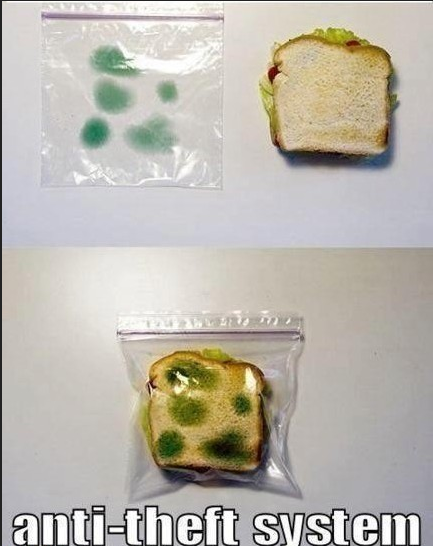
A Tuna Sandwich Named Kevin
I just recently saw one of those cute little sayings on Facebook that said, “Strange new trend at the
office. People putting names on food in the company fridge. Today I had a tuna sandwich named Kevin”.
As funny as that sounds, it’s actually pretty accurate. And that’s not so funny. Whether it’s a sandwich, an employee or personal space in the “cube farm”, R-E-S-P-E-C-T seems to be often missing. With a lack of respect comes a lack of trust. With a lack of trust comes an unproductive office. Oh yes, creativity also takes a hit.
Did I mention that teamwork suffers, as does enthusiasm and commitment to the organization? Let's not forget that customer service suffers. Motivation decreases, and so does communication.
Seems to be a trend here. Instead of having to deal with all of these negatives, why not show some respect for your employees and colleagues and turn those negatives into positives?
Labels:
attitude,
commitment,
culture,
motivation,
negativity,
productivity,
teamwork
Wednesday, May 6, 2015
The NEW One Minute Manager
The New One Minute Manager by Ken Blanchard and Spencer Johnson is a book for all of
today’s leaders. It doesn’t matter if you read the original or not, you’re going to want to catch up with the new updated edition. The underlying principles remain the same, however the book describes how effective leadership is now based more on side-by-side relationships instead of the dying top-down interpretation.
The One Minute Manager has been a staple on any leadership book list since 1982, and the revised edition is going to ensure that it stays there. A lot has changed, technologically and professionally, since the ‘80’s, so it just makes sense that “One Minute” changes.
The three “secrets” of,
- One Minute Goals - keep them front and center
- One Minute Praisings - be honest
- One Minute Re-Directs (formerly Reprimand) - for the learner (which we all should be)
have been updated, to make huge differences for a new generation of leaders.
There are so many quotes in this book that will become classic all over again. “Never punish a learner - re-direct their behavior.” “The best minute I spend is the one I invest in people.”
The book is still an easy 100 page read, so take advantage of an afternoon to make a difference for yourself and for those you lead. One minute really CAN make a difference.
Labels:
attitude,
book review,
brand,
care,
character,
hiring,
leadership,
productivity,
recogntion
Thursday, April 16, 2015
Powerful New Leaders LiveCast - FREE
If you're a new leader, a leader of leaders, or responsible for leadership development in your organization, STOP. Because what I'm about to announce is for YOU.
Over 5 years ago, Kevin Eikenberry and Guy Harris introduced the Bud to Boss Workshop.
Just over 4 years ago, they released the bestselling book, From Bud to Boss: Secrets to a Successful Transition to Remarkable Leadership. Since then they've influenced thousands of leaders and organizations with practical approaches to becoming a more competent and confident leader.
And now they're announcing a powerful, new event: The Bud to Boss Video Livecast. This content-packed, free event will provide insight, information and inspiration for anyone interested in creating more effective leadership skills.
Taking place on April 17 from 1–4 pm ET, attendees will:
- Have an opportunity to submit questions that will be answered during the Livecast by best-selling authors, Kevin Eikenberry & Guy Harris.
- Hear a one-on-one interview with Cheryl Bachelder, CEO of Popeyes® Louisiana Kitchen, Inc., discussing her leadership transitions and successful leadership in general.
- Listen to targeted interviews with expert leadership authors and practicing leaders discussing and addressing the concerns of new leaders, and providing valuable insight for all.
- Earn valuable giveaways, prizes and more!
To learn more and to reserve your free seat, visit the website here.
Believe me . . . it WILL be worth your time.
Monday, April 13, 2015
Wind In Your Sails
I like reading good books about leadership, business, and entrepreneurialism. I also like sailing.
Wind In Your Sails, by David Greer is right up my alley. The thing is, the book doesn’t just have things I like, David puts them all together in an interesting and extremely informative manner. It’s a new favorite.
Wind In Your Sails takes you through ten strategies for entrepreneurial success. This includes vision, goals, innovation, sales, products, and people. Did you catch that last one? People. There’s a common thread throughout the book. Like David said, “People buy products and services. People deliver them. People create products.” In order to be successful, you must know how to “attract, retain, and motivate the people in your business”.
This book doesn’t rely on a bunch of theories someone threw together in order to get their name on the cover of a book. David Greer shares his 35 years of experience along with case studies of a number of other successful entrepreneurs.
Each of the chapters include said case study, lessons learned, and action challenges. So it’s not a book you’re going to just read and put down to attract dust. If you really want to be successful, you’ve got a great big helping hand right here. Action - produces success.
Labels:
attitude,
book review,
brand,
commitment,
culture,
entrepreneur,
focus,
leader,
relationships,
values,
vision
Tuesday, April 7, 2015
Chess Not Checkers
A book worth the wait with no disappointment. I’m talking about Mark Miller’s new book, Chess Not
Checkers: Elevate Your Leadership Game. There are a handful of authors that I look forward to new books from, and Mark is definitely in that class.
Blake Brown is back in this easy to read, easy to follow, hard to put down story about learning how to go from the “fun, highly reactionary game” of leadership checkers to the strategy, unique abilities, and heightened focus of leadership chess. Mark’s leadership experience and knowledge shines through as I find myself nodding my head up and down as I read these intuitive concepts. I can tell that he’s been there and done that, and that’s a big draw to any of his books. Most of us can only dream about having mentors like the story’s Debbie and Jack. Now we can, at least on paper.
There are so many lessons to be learned that I couldn’t even begin to speak in depth to them. You just need to pick up a copy (and extra’s for your team) and find out for yourself.
Labels:
accountability,
attitude,
book review,
care,
character,
culture,
leadership,
motivation,
productivity,
relationships
Tuesday, March 24, 2015
Trial to Prevent Error
This is a lesson about finding out the hard way. I had the brilliant idea to record a computer training session on WebEx and then convert it to .mov or .wmv to import intoCamtasia for editing. Seemed like a pretty easy process. Except it didn’t work!
After multiple attempts at converting, with the WebEx converter, I decided to look up the issue on online forums. I didn’t see anything positive. I then asked a couple of people I work with if they had ever tried to convert WebEx video. They had . . . and it didn’t work.
Now this isn’t meant to be a WebEx bashing session, but if I had tested it out first, I would have realized that I should have recorded right to Camtasia instead of trying to convert the WebEx recording. I could have saved myself a lot of time AND rework. Now I have to go back and have the person who performed the training do it all over again.
Not a great outcome, but a great lesson in making sure that I try new things out ahead of time, no matter how good it sounds.
Labels:
attention,
learning,
preparation,
productivity
Wednesday, March 18, 2015
Dare to Serve . . . I Dare You
As soon as I read the table of contents I could tell I was going to like this book. Part 1 -Whom will we serve? What is the daring destination? Why do we do this work? How will we work together?
I’m talking about Cheryl Bachelder’s new book, Dare to Serve: How to Drive Superior Results by Serving Others. You may know her as the CEO of Popeye’s Louisiana Kitchen. A CEO with a new way to lead that, in seven years, increased profits by 40%. Leadership style. No fancy gimmicks. Just Dare to Serve leadership.
One of my favorite parts of the book is the Starship exercise that "revealed some remarkably simple lessons in leading high-performance teams." These are five things that make me stop and shake my head, thinking, why don't more leaders do this? Focus on team member strengths, determine skill gaps, respect different talents. This is why Popeyes Franchise Owner Survey results changed so dramatically in five years.
With reflection questions throughout to keep you engaged and thinking, this is a book that any leader will gain insight from. Some people just don’t grasp the idea of servant leadership, thinking they have to roll over and become submissive. If this is you, pick up Dare to Serve and see what it’s really about. Learn to serve others with humility, courage, and passion. All while increasing productivity and profits.
As Cheryl says in the book, “avoid the spotlight”. “A leader without personal responsibility remains stuck in the spotlight and fails to serve others well.” Look at yourself in the mirror, and Dare to Serve others.
Labels:
accountability,
attitude,
book review,
brand,
care,
character,
communication,
culture,
empowerment,
integrity,
leader,
motivation,
trust
Tuesday, March 10, 2015
Close the Talent Gap
This week's guest blogger is Stacy Feiner, PsyD, author of the new book, Talent Mindset:
The Business Owner's Guide to Building Bench Strength. This book is sure to help you get connected to your employee's and help you be able to better assess your talent pipeline.
Close the Talent Gap - People Drive the Numbers
Do you have a gap between wanting a bench of strong, talented individuals to take the company into the future, but realizing you do not have a system in place for building bench strength?
The big picture questions are:
- · How will your business become agile and adaptable in our new economy?
- · How can you hire the right people every time?
- · Do you even believe you can?
- · Can you build a bench that is ready to move into bigger roles without creating new holes?
- · How can you get off the talent treadmill and break the cycle of hiring less than what your company needs to peak perform?
The answer is Strategic Talent Management: By executing a full-circle process with people at the core, you can have a system for acquiring, developing, and engaging talent that is embedded within your overall business strategy.
Strategic Talent Management provides the mechanisms for bridging your culture with your strategy. We begin with a foundation (the philosophy of the owner), add the mechanics (the nine centers of excellence), and embed this process into the culture (engagement).
The process starts by exploring your beliefs about human nature and evolving a leadership philosophy, which compels you and empowers you to activate a strategy to attract, retain and engage people at your company. You will learn how to activate your team so they can evolve at the pace your business is growing because a common struggle for businesses is that their talent does not keep pace with the growth of the organization. Ultimately, Strategic Talent Management is the ability to shape a culture that fosters the attitude and behaviors that create an engine for success.
With a Strategic Talent Management mindset, you’re ready to apply the psychological strategies, not just the financial ones that will make your company agile and capable to weather economic storms or pull out in front when the conditions are smooth. This process helps you empower individuals to achieve their aspirations, increase productivity and drive to the bottom line. The process is ongoing. It’s a commitment to change the way you lead people, which changes the way you do everything. Strategic Talent Management is about building bench strength.
This is an excerpt from Talent Mindset (available on Amazon), and what you just read is merely the tip of the iceberg. I would love for you to visit me at stacyfeiner.com or connect on Twitter @stacyfeiner so that we can continue this conversation.
Labels:
accountability,
attitude,
book review,
care,
commitment,
focus,
hiring,
leadership,
relationships
Tuesday, February 24, 2015
Why Have Good Character?
Few parents REALLY know how to prepare their children for work life. Even fewer take the
time. Joanie B. Connell’s new book, Flying Without a Helicopter, will give them a needed boost towards their child’s journey of self-awareness to prepare them for success, not requiring them to take years to figure it out.This book is broken down into Problems, Solutions, and Exercises, making it easy to follow and to understand. Whether you’re a parent, a young adult, or even a manager or business owner, you’re going to read this book and end up with some much needed insight into the TRUE meaning of work and life skills.
My guest blogger today just happens to be Joanie Connell. Think about your own character. Is it appropriate for teaching your children?
Why Have Good Character?
By Joanie Connell
One evening several years back, my husband, daughter and I were sitting around the kitchen table after dinner. My husband got up and went into the pantry and shut the door behind him. I heard a bunch of rustling noises, like plastic bags being handled. I couldn’t for the life of me think of why my husband would go into the pantry and shut the door, and what he could possibly be doing in there. Then all of a sudden I remembered that I had hidden all of the Halloween candy in there! He was eating it! What do you think I did? I covered for him in front of my daughter then I took a turn!
Yes, I still do feel guilty about it, 8 years later. It just doesn’t seem right to tell my daughter that she can’t eat candy but I can. But how many of us do this? How many parents hold their children to different standards than they hold themselves? It occurs in various forms.
- The children should get all A’s, even though the parents didn’t.
- The children should cross at the crosswalk, even though the parents don’t.
- The children should never lie, even though the parents do.
- The children should not drink alcohol before the legal age, even though the parents did.
- The children should perform community service, but the parents don’t.
Children learn character from their parents. They catch us in a lie. They ask why it is okay to tell Grandma that her cake was delicious even though we threw it away. They hear us yelling at other drivers from the car. They see whether we return the shopping cart, whether we come to a full stop at the intersection, whether we download music from iTunes or someone else’s computer.
But we shouldn’t just have good character for our kids. We should have it for ourselves first and foremost. And if we don’t have good character for ourselves or our kids, we should have it because society needs people of character for it to succeed. If we all let ourselves go, looking out for no one but ourselves, cheating the rules, and ignoring requests, we will all lose. Humans are social beings; we need each other to survive. Why not treat each other well in the process?
Joanie B. Connell, Ph.D., is a talent management expert and career coach for people across job levels, ages, and industries. She works with companies to attract, develop, and retain top talent and she works with individuals to improve their success and happiness in their careers. Learn more about Joanie and her new book, Flying without a Helicopter online at flyingwithout.com.
Labels:
attitude,
benefits,
book review,
care,
character,
culture,
family,
relationships,
responsiblity
Tuesday, February 10, 2015
Sprinkles - It's What They Want
What an absolute joy to read. Chip Bell’s new book, Sprinkles: Creating Awesome Experiences Through Innovative Service, kept a smile on my face the whole way through.
As a customer service program/training developer, I’m always looking for new ideas and twists. Looking at it from the perspective of a fun food that (most) everyone likes is brilliant. It’s so easy to identify with. Customers aren’t so brand loyal anymore. They don’t want just everyday service. They want it “a la mode”. They want crushed graham crackers (my favorite), cherry’s, chocolate, candy, . . . they want sprinkles.
Walt Disney once said, “Do what you do so well that they will want to see it again and bring their friends”. People will talk about your great service. They won’t talk about you if you’re just, meh. You have to add that extra sprinkle.
There are so many wonderfully entertaining stories, examples, and inspirations in this book that you’ll want to share it with others. You won’t just want to share the book but actually start implementing some of the ideas Chip speaks about. This is the type of book that reignites. Reignites thinking, reignites desire, reignites the spirit of why you’re in business in the first place.
Labels:
attitude,
book review,
brand,
care,
customer service,
Disney,
motivation
Wednesday, February 4, 2015
The Hidden Leader
Monday launched the new book, The Hidden Leader, by Steve Edinger and Laurie Sain. It definitely hits the nail on the head and should be read by anyone who searches out leaders. Future leaders aren't always the most confident extroverts. They're the ones taking the initiative to get the job done. Today I'm happy to host a blog post by author Steve Edinger. Enjoy.
On July 14th, 2014, I was running with the bulls in Pamplona. The running of the bulls is part of the Festival of San Fermin, which has been held annually since the middle ages, honoring the patron saint of the city. I ran on the last day of the festival with a small group of friends. On the return flight home I couldn’t help but reflect on the experience, and some parallels to my work with clients designing and implementing successful strategies. Here they are.
This post was originally published at www.edingergroup.com on August 1, 2014
On July 14th, 2014, I was running with the bulls in Pamplona. The running of the bulls is part of the Festival of San Fermin, which has been held annually since the middle ages, honoring the patron saint of the city. I ran on the last day of the festival with a small group of friends. On the return flight home I couldn’t help but reflect on the experience, and some parallels to my work with clients designing and implementing successful strategies. Here they are.
1. Clearly define your strategy in specific detail. We wanted to complete the run safely by:
Holding off on our start until the bulls ran by. Nobody can keep up with a bull running 22-24 mph and we wanted to run with the bulls (behind them really), not in front of the bulls.
Running as close to the left side of the street as possible. (In our observation of the run on the previous day, and video footage of past races, it seemed that because of the turn before the area of our starting position, they tended to drift to the right side.)
Sticking together in pairs. We used the buddy system to look out for each other.
Finishing the run by breaking left toward the 9 o’clock position of the bullring as soon as we entered.
Defining the outcomes with specificity is much harder than it seems, and good strategies are clarified so that they are easily understood. They are precise and specific as it relates to objectives, and how those objectives are going to be achieved. This is the most difficult part of executive work, as it requires patience, making tough decisions and judgments, as well as a lot of critical thinking. Because of that, leaders are often in a rush to just get this work done. It is much easier to read and respond to emails, attend meetings and focus on the tactical work that doesn’t require as much thought.
2. Be prepared for your strategy not to go according to plan. How many projects or initiatives in your business have turned out exactly as they were planned? My experience has been that it is rare. On the morning of the run there was a light rain, which made the streets a little more slick than usual. Instead of the bulls running together in a pack (which is the best case) they got separated as they came around one of the turns. On this day, they were running closer to the left side of the street. Despite your best efforts and research, you will never be able to rely completely on it, and you will never have all of the facts. For example, we learned only on the morning of the race that the Miura Bulls, renowned as Spain’s largest and fastest bulls, were reserved for the final day. Imagine how that made us feel.
Even if the assumptions we make in formulating strategies are incorrect, it is critically important to go through the progression of doing so. In the process you become keenly aware of different alternatives, capabilities, and scenarios, and if necessary can adapt quickly and make adjustments in real time. As Dwight D. Eisenhower famously said, “plans are nothing; planning is everything.”
3. Getting everyone in your company to understand and behave consistently with your culture is the most important thing you can do to get your strategy implemented. Most of the runners in Pamplona shared the same goal—to finish without being punctured, pierced, or steamrolled. While there are always a few with different goals (some want to touch or run in between them), the vast majority shared that objective. But as soon as the rocket to start the race went off, things got pretty chaotic with runners of different speeds getting in each other’s way, and often hindering one another in their own rational self-interest.
Even when people in an organization have the same overall goals for the company to succeed, individual approaches can vary greatly. This tends to reduce quality of work and productivity, as well as create conflict. To prevent this, people must understand what is expected of them in your culture, and how they fulfill your strategy. Further, they need to have exemplars to look to as role models, and appropriate rewards and consequences.
4. Take time to evaluate your performance. For the entire day following the run as we traveled from Pamplona to Madrid before heading home, we relived every moment. The emotions leading up to the run, what happened during the run, what others saw from their vantage point and so forth. We only ran once, and in your organization the run is continuous.
My most successful clients are unquestionably those who review their strategy at regular intervals, make adjustments, and keep it dynamic. It doesn’t sit on a shelf in a binder. They work hard to integrate strategic perspective into all of the work they do and for any projects or initiatives. They ask the question “how will this help us to achieve our strategy?”
The running of the bulls is an extraordinary and unique experience. While I’ll never do it again, I found valuable insights from the run that illustrated what is critical when creating and executing a strategy. Done well, you can still succeed even when everything doesn’t go as you expected. All 8 of us completed the running of the bulls, unscathed.
Scott Edinger is co-author of the new book The Hidden Leader. As founder of Edinger Consulting Group, Scott has worked with leaders in nearly every industry sector, helping them formulate and implement growth strategies, increase revenue and profit, develop leadership capacity, drive employee engagement, and attract and retain talent.
Labels:
accountability,
advancement,
attitude,
book review,
change,
culture,
development,
hiring,
leader,
recogntion
Monday, February 2, 2015
Refire! Don't Retire
Age is an attitude, not a number. Anyone who’s “getting older” should read Ken Blanchard and Morton Schaevitz new book, Refire! Don’t Retire.
Too many people use age as an excuse to slow down, stop learning, and retire. You’ve got a lot more time and adventure in you than you think. Too many people just give in to time. Here, you have an outline to refiring emotionally, intellectually, physically, and spiritually.
This book is so full of thought provoking ideas, you’re not going to want to put it down. I know, I know, “I don’t like to read”. Well, fine. Get the book anyway and just go through the Pause, Reflect, Take Action questions at the end of each section. I guarantee you’ll have a number of “a-ha” moments.
Not thinking about retirement yet? Read it anyway. There are many doors waiting in your future (and present) besides the retirement door. Start your renewal now. Enhance relationships, stimulate minds, and revitalize bodies. You have the knowledge and ability in you, you just need some help pulling it out and putting it all together. Blanchard and Shaevitz are going to guide you.
Don’t plan on getting old. Plan on living life. If you’re living too well to look at the clock, you won’t need to know what time it is. You’ve got the steps to a more fulfilling life, now put it all together and live!
Labels:
attitude,
book review,
purpose,
relationships,
responsiblity
Monday, January 26, 2015
Leaders Need Change
If
you think back a number of years you may recall that there used to be a VERY distinguishable difference between leaders and staff. ALL work was done by the staff and the leaders
oversaw that work. The leaders’ thought
was, “I don’t care how you get it done, just do it. Now!”
There was a very clear line in the sand.
Today’s
leaders are finding out that they can’t command staff’s best work. An environment must be created to promote the
desire to do their best. It’s actually
become more of a partnership between leader and staff.
Think
of all the things that have gone on over the years, like:
- more competition,
- new technology,
- restructuring/mergers,
- changing values and needs of today’s staff,
- increased demand for better customer service.
Three
basic things can help you out on your road to a new partnership.
- Energize: It’s not possible to be effective while just trying to infuse energy in your team. Use their energy, channel into it, and leave them with more than what they started out with.
- Support: You’ll need to be there for them to pick up the pieces if they fall. That doesn’t mean to be there to stop them from falling. This is how people learn. Encourage staff to question. Even if it’s the dumbest question you’ve ever heard, it’s a learning time for them.
- Communicate: You’ve heard the old saying, “knowledge is power”, I’m sure. True statement. But the only way that it can be good is to spread some of that knowledge around. The constant changes that we live with requires you to communicate more and more. Don’t always rely on training, memos, etc. Get out there and do it yourself.
For
goodness sakes, don’t be afraid of change.
Change is good. Most people just
make it bad.
Labels:
attitude,
brand,
change,
communication,
culture,
leader,
relationships
Wednesday, January 7, 2015
I Love a Spicy Meatball
Yes, I love a spicy meatball . . . and wings, and dips, and pizza. But they sometimes rub
me the wrong way, if you get my drift. Spicy is good. Too spicy is bad.
A good spicy team member is going to communicate, share openly and willingly, question ideas/decisions, and be honest and straight forward. But to keep from becoming too spicy, he/she's also going to actively treat others with respect and be supportive.
Kind of like people. You've heard the saying, "If you're the smartest person in the room, you're in the wrong room". Don't be the equalizer. You've got to add some spice to the room. But you can't just do it randomly. Just like spicy foods, if someone on the team is too spicy, you're going to have problems.
A good spicy team member is going to communicate, share openly and willingly, question ideas/decisions, and be honest and straight forward. But to keep from becoming too spicy, he/she's also going to actively treat others with respect and be supportive.
You don't want all yes wo/men on your teams. You'll never improve to the degree that you need to keep up. Spicy people are a key. You need people to keep things active and to keep everyone's minds flowing and thinking. The first idea isn't always the best. In fact, it usually isn't. You need quality discussion.
Walt Disney once said that, "Ideas come from curiosity". When setting up teams, take care to really look at everyone you're considering. You need people that exhibit curiosity. Spice it up a bit and get a good mix. A good mix equals good results.
Labels:
care,
commitment,
culture,
dedication,
development,
Disney,
empowerment,
productivity,
relationships,
teamwork
Tuesday, December 9, 2014
Don't Forget the Thanks
As Christmas quickly approaches don't forget to thank the people that have supported you all year. If you think about it for a minute you'll probably come up with a much bigger list than you thought you would. Thank your:- supervisor/manager,
- team members,
- assistants,
- customers,
- confidant,
- mentors,
- spouse,
- family members,
- friends,
- business associates,
- students/learners,
- office mates,
- Military,
- first responders,
- financier,
- lawyer,
- dry cleaner,
- insurance agent,
- the kid that cuts your grass,
- dog walker,
- mail delivery/newspaper delivery, and
- God.
A pretty long list, right? You're probably starting to get the picture now. You have a pretty extensive "supporting cast". I bet you can think of more.
You didn't get where you are, all by yourself. You can't do what you do, all by yourself. You can't live the way you do, all by yourself. Skip to the end of the Scrooge movie and go right to the thanks!
Labels:
attitude,
brand,
communication,
culture,
integrity,
leadership,
recogntion,
thanks
Tuesday, November 18, 2014
Follow Your Conscience
I was going to start out with, “a breath of fresh air”, but
someone already did. So I was going to start out with, “inspiring” . . .
already done. How about “enlightening”? Nope, taken.
So what the heck, Frank Sonnenberg’s new book, Follow YourConscience, is an enlightening and inspiring, breath of fresh air. It
just is.
There are a lot of people in business who believe that
they’re a great leader and they are there to support others. There are
people who believe the same of their leaders. Have you ever heard the
saying, “it’s not personal, it’s business”? People seem to use that as an
excuse to do less than they really could for people. I (h/she) could do
better - but it’s just business. Just begin reading Frank’s book and
you’ll see that you - or your leaders - are missing out on some things.
Think about what type of role model you believe you are.
Then read this book. Now, what type of role model do you believe
you are? What kind of role model will you become?
Conscience - attitude, authenticity, integrity, humility,
passion, fairness, faith. These are just a few of the things Frank
discusses, and in a way that’s easily understood and painless to put yourself
in the middle of.
My suggestion? Read the book. Share the book. Use it for a leadership book club. It all makes so much sense that you’re not going to want to keep it to yourself.
Labels:
accountability,
attitude,
book review,
brand,
care,
commitment,
culture,
dedication,
leadership,
purpose
Thursday, November 6, 2014
Perception and Pulling the Weeds
Perception . . . it's what ultimately may make or break you.What customers see, hear, touch, and smell may be the things that put your organization over the top of another.
A good example. Have you ever noticed the hitching posts on Main Street of Walt Disney World? Probably not. That's because they paint them every night if needed. They're nicely painted, no scratches, no gouges. Do you think you'd notice them if they were all beat up? Most likely. Disney wants to be known as a clean and well kept destination. And they are.
How many times have you walked into a barbershop, Doctor's office, restaurant, or other business and the first thing you see before even entering are weeds in the planters - that are supposed to hold flowers? You may also see signs falling down, cigarette butts on the ground, filthy windows, portions of lighted signs that are burned out, hand-written paper signs on the doors and windows, employee vehicles parked where customers should be . . . the list goes on.
The point is, that this is part of the businesses Brand (good or bad), and all of these things form your perception of the service and leadership of the establishment before you even enter! But it doesn't stop there. The interior is just as important, if not more. You may have the better service or the better food, but the guy across the street with the more cared for appearance may have more customers.
Put yourself in a customer's shoes. Make a weekly walk through with a clipboard and make a list of everything that needs attention. Better yet, create a checklist of things to look for so you don't miss any. Just remember that none of this does any good unless you actually tend to the difficiencies.
Labels:
attention,
attitude,
brand,
culture,
customer service,
leadership,
responsiblity
Tuesday, October 28, 2014
What's In It For Me?
The first thing that adults in training ask themselves is, "what's in it for me?", or WIIFM.When designing or presenting courses for your employees, always keep this in mind. Whether they're actually verbalizing it or thinking it subconsciously, it's still on their mind. It's the main motivator for most of the things we do. It helps us to translate an external need into an internal one. The WIIFM for training could be anything from becoming a better employee, getting a raise or promotion, or . . . just getting done and completing the test.
For the most part, we like the familiar and are uncomfortable with change. But our brains like novelty, not memorization. We resist meaningless stimuli. So any time that we can integrate the information we're gathering into something useful, we're getting that WIIFM.
As adults, we have many experiences to fall back on. Use that to your advantage when facilitating your employee classes. Set the tone early. You don't have to actually state (and I would recommend not) that "the WIIFM for the class is". But instead of letting them use the get done and test reason, take a couple of minutes to state the objectives/reason for the class and discuss the positive outcomes of attending. Motivated adults seek out learning because they have a use for it. Get them thinking about why they're REALLY there.
Labels:
advancement,
attitude,
facilitator,
learning,
presenations
Subscribe to:
Posts (Atom)
Labels
- attitude (134)
- culture (124)
- relationships (107)
- leader (102)
- commitment (94)
- motivation (79)
- communication (76)
- care (71)
- book review (57)
- brand (53)
- development (52)
- productivity (50)
- attention (49)
- customer service (48)
- accountability (47)
- leadership (46)
- responsiblity (43)
- Disney (42)
- learning (38)
- recogntion (35)
- teamwork (35)
- integrity (30)
- values (30)
- change (28)
- focus (28)
- time management (27)
- advancement (26)
- trust (26)
- dedication (21)
- training (21)
- negativity (18)
- empowerment (17)
- hiring (17)
- benefits (15)
- turnover (14)
- character (13)
- networking (10)
- award (9)
- ethics (9)
- fun (9)
- incentives (9)
- brainstorm (8)
- humor (8)
- meetings (8)
- preparation (8)
- purpose (8)
- vision (8)
- family (7)
- mbwa (7)
- orientation (7)
- priority (7)
- customers (6)
- entrepreneur (6)
- facilitator (4)
- presenations (3)
- social media (2)
- manager (1)
- thanks (1)