First off, this isn't a young folks bashing post. But it is a lack of thought training bash.
We've all been there. We walk into a store with questions or to the check-out and see young workers. Do I stop that clerk or go to that register - or do I go to the more "seasoned" worker?
Young workers aren't usually real skilled at customer service. They don't have the experience or the thought processes of the more seasoned worker. However, they do the same job, see the same customers, deal with the same situations. It is leaderships responsibility to ensure that these young folks have the proper training PRIOR to stepping foot on the floor by themselves.
I visited a major pet store chain this weekend. When I got to the register my $3.99 item rang up as $6.99. The cashier's response? "Oh, it was probably in the wrong place." No, price check, or "I'll take a look". It was 'probably' in the wrong place.
Good customer service is not about guessing and leaving it at that. It's about knowledge and finding out answers. These are two easy things that CAN be taught to new staff. If you don't know about a product ask someone else. If you don't know the answer, find out.
"I don't know, but I can find out" will save MANY customers for your organization. Try it out.
Showing posts with label orientation. Show all posts
Showing posts with label orientation. Show all posts
Tuesday, June 26, 2012

Thursday, January 13, 2011
Take A Culture
 When staff speak and understand the language of their organization’s culture, they know how to behave in the organization and what’s expected of them. How’s YOUR culture?
Founders of organizations can have a profound – and long lasting - effect on the organizations culture. But so can you, the leader. You, along with your counterparts, have an ability to hold onto that culture or to mold a brand new one.
A founder’s own values guide the building of the company. He/she has substantial influence on the values, norms, and standards of behavior that develop over time. That’s typically a good thing. But what happens once the founder is gone?
Creator and President of Wendy’s, Dave Thomas, resigned from his day-to-day operations in 1982. However, by 1985, several company business decisions and loss of brand awareness and organizational culture urged the new president to bring Thomas back into an active role with Wendy's. He began to visit franchises and promote his hardworking, “mop-bucket attitude” - something that hadn’t been seen since he left. New management just didn’t keep up with the successful culture of the organization.
Marty Sklar, former Vice Chairman and Principal Creative Executive at Walt Disney Imagineering, said, "From the beginning, starting with Walt Disney, we have had five things that make me proud to be part of this Company: high-quality products, optimism for the future, great storytelling, an emphasis on family entertainment and great talent, passion and dedication from our Cast Members." This has been the Disney culture from Walt, through the Michael Eisner years, and now with Bob Iger.
In the case of Wendy’s, new leadership allowed the culture to change - for the worse. With Disney, they recognized a good thing and stuck with it. A saying they have at Disney Traditions sums it up the best – “We don’t put people in Disney, we put Disney in people.” Do the same with your organization.
Thursday, November 25, 2010
Manage Stressful Times
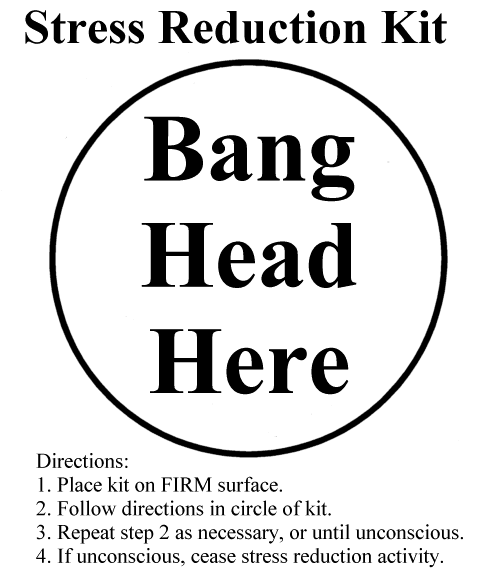 In stressful times people tend to change in one way or another. They take shortcuts in procedures - they hurry through steps - they skip steps in reviews. Procedures are made for a reason . . . to document correct ways of doing things so that there is consistency throughout the organization.
Supervisors need to step up during tense times to ensure that procedures are being completed correctly. Depending on the type of company you work at, skipping steps may not be a real big deal. In others, like the medical field for instance, it could literally mean the difference between life and death.
Do things right the first time, all the time! If people are allowed to slack off, at ANY time, there's a good chance that it's going to happen more often than what you want. They soon begin to reason for themselves in order to substantiate non-conformance. That will then trickle down to other staff and soon into the training of new employee's. Then you've got new employee's thinking that it's the common practice and now you have new issues to work with - in particular, additional time for retraining.
Walk the talk. It's up to the supervisor to be a role model for employee's. If they see you slacking off and taking shortcuts it becomes an excuse for them to do the same. Put yourself in the customer's shoes. No matter what kind of business you're in, would you as a customer, tolerate anything but perfection? Of course not! Act as if you're part of the team, not always the head of it.
I hope you all have a wonderful Thanksgiving.
Tuesday, January 12, 2010
How Weird Are You?
 That’s an odd question, isn’t it? Not if you’re applying for a job at Zappos.
I just read an interview in the NY Times with Zappos CEO Tony Hsieh on Zappos’ company culture. I wanna work there. They’ve formally defined their culture into 10 Core Values with which they use to hire and fire. What a neat concept. Most organizations talk about their culture in orientation (you know, that week long sleep-fest) and that’s about the last time you “experience” it.
Zappos holds two sets of interviews for prospective employee’s – one with the hiring manager and team to determine knowledge and team fit. The other is with HR to determine culture fit. Cool.
One of their values is, “Create fun and a little weirdness.” So for this HR asks, “On a scale of 1 to 10, how weird are you?”. One means you’re probably too straight-laced for them and 10 means you may be too psychotic. This is good stuff.
Because “everyone is a little weird”, Hsieh says, they want to “celebrate each person’s individuality, and want their true personalities to shine in the workplace environment, whether it’s with co-workers or when talking with customers”. Wouldn’t it be great to work at a place where you can actually just be yourself, quirks and all?
Now check this out - each year they create a "culture book" in which all employee's are asked to write about what the Zappos culture means to them. The unedited employee reviews of the company are then "freely available to visitors and anybody who asks for a copy." If you've ever looked up employee company reviews on www.glassdoor.com (Zappos reviews rated no less than 4 on a 5 scale) you'd know that most companies would never make such books available.
Where most organizations let the culture happen, Zappos has taken the lead in defining it. Employee's need to FIT INTO the culture, not transform it.
To read the whole fascinating interview with Tony Hsieh on nytimes.com, click on the title of this blog.
Where most organizations let the culture happen, Zappos has taken the lead in defining it. Employee's need to FIT INTO the culture, not transform it.
To read the whole fascinating interview with Tony Hsieh on nytimes.com, click on the title of this blog.
Wednesday, September 9, 2009
So You Think You Have Ethics . . .
 Well? Do you? You probably think you do. We all do. Most leaders do know the difference between right and wrong, but a lot of them talk it more than they walk it. Some just don’t care.
As a supervisor, you’re a leader and you’re expected to set an example for your staff – and other leaders. You’re in a position that you’re being constantly watched. When others see you behaving unethically, you’re sending a loud message to your co-workers that ethics doesn’t matter to you. And guess what. It won’t matter to them either.
If you don’t exhibit the following personal qualities and behaviors, you have some work to do:
- Honesty
- Integrity
- Impartiality
- Fairness
- Loyalty
- Dedication
- Responsiblity
- Accountablity
According to Trainingscape, there are six keys to making better ethical choices:
E – Evaluate circumstances through the appropriate filters (culture, policies, laws, relationships, etc) .
T – Treat people and issues fairly within the established boundaries. Fair doesn’t always mean equal.
H – Hesitate before making critical decisions.
I – Inform those affected of the standard/decision that has been set/made.
C – Create an environment of consistency for yourself and your working group.
S – Seek counsel when you have any doubt (but from those who are honest and who you respect).
You may have a Code of Ethics, but if you don’t live it from day to day, what’s the use?
Thursday, February 12, 2009
Follow-Through
 I read a quote in a recent American Management Association (AMA) publication that hit my funny bone. Not only because it was comical but also so true - "After spending so much money on organizational change programs and leadership development, why do I always end up with Dilbert and re-runs of The Office?" Sound familiar?
The issue, a lot of times, is that we come up with a "theory of the month" on why things are the way they are. We quickly put our resources together to come up with a training "program" on coaching, or diversity, or motivation techniques. The problem is that in order to be a "program" there has to be follow-on training, follow-up, and follow-through. Like throwing a football or hitting a tennis ball, you can't be effective without follow-through. You can't hold one class or seminar and expect people to "get it". Sure it may be all great at first, but doesn't it usually die a slow, or often fast, death?
A good example is the Rockhurst or Padgett seminars. They're good seminars to attend and give you some great tools. But without someone back at the ranch to help you keep those ideas going, they normally die off very quickly.
Another good example (my soapbox again) is orientation classes. For the most part, they're worthless. New staff get thrown into these classes, told to read a bunch of stuff, and take a test. Then that's the last they hear about the origins of the organization, the vision, the mission, and how their job impacts the rest of the organization. What's been accomplished? Next to nothing.
Point is, you need to follow-up and follow-through if you want programs of any type to continue.
Tuesday, July 22, 2008
Employee Orientation
Formal orientation programs should be something that is constantly looked at. Orientation can either make or break a new employee. I've actually known of people who have quit their new job because of orientation. Orientation quite often shows a direct correlation to your organizations overall training system. If orientation is unbearable . . . chances are so are the rest of your training programs.
Organizations normally want to get their new employees up to full productivity as soon as possible. That means cramming all of the new employee material into a reduced amount of time. Bad news. If employees are immediately overwhelmed with information that they probably won't remember anyway, there's no way they'll be able to contribute effectively to the team or be able to give quality customer service. If they're taught right off the bat to get through as fast as possible, then that's the way they'll approach the job from there on in.
If you have a number of things that need to be taught, keep to the basics. Cut out the "nice to know stuff". Give more time and repetition to critical information. The human brain can only hold on to so much new information. Overload it and it shuts down.
Facilitators also hold a very important role for orientation. These are some of the first people that the new employee will meet. Make sure they're enthusiastic, personable, and can project a positive perception about the organization. Without these characteristics bad attitudes could begin right here.
Remember - orientation is another type of welcome to your new employee. Make it count just as you would with a customer.
Subscribe to:
Posts (Atom)