Showing posts with label motivation. Show all posts

Saturday, January 16, 2021

Creating Magic

As I’ve gotten back into blogging, I’ve been looking back at my favorite book reviews and realized I never wrote an actual review on my, probably all-time, favorite, Creating Magic: 10 Common Sense Leadership Strategies From a Life at Disney, by Lee Cockerell. I’ve mentioned it more than a few times but it deserves more.

Creating Magic probably took me twice as long to read, just because I did so much highlighting throughout. I have a good size personal library of leadership and customer service books and it is, by far, my most loaned out book.

This is the perfect book for any leader working in, or interested in, the service industry, and for that matter, any industry. After starting out his career as a much more hard-nosed manager, Lee has become the model of great leadership building immediate rapport with employees. He holds nothing back in this book, describing each job along his path and what he had to change about himself to become a successful leader.

One of my favorite quotes is actually the very first line of the book, “It’s not the magic that makes it work; it’s the way we work that makes it magic.” Following the 10 strategies of the book, Lee was able to become a highly-skilled, efficient, and admired leader as Executive Vice-President, Operations of Walt Disney World Resort. Those 10 Strategies are:

#1 - Remember, everyone is important

#2 - Break the mold

#3 - Make your people your brand

#4 - Create magic through training

#5 - Eliminate hassles

#6 - Learn the truth

#7 - Burn the free fuel

#8 - Stay ahead of the pack

#9 - Be careful what you say and do

#10 - Develop character.

These strategies can easily be implemented by the smallest business owner all the way to the Fortune 500 CEO. It’s the way that people are treated that makes any business, and Lee Cockerell gives you the common sense approach and inspiration to make it a reality.


Tuesday, December 29, 2020

Help Them Grow or Watch Them Go - Revisited

Still, one of my favorite leadership and culture books. Help Them Grow or Watch Them Go, by Beverly L. Kaye and Julie Winkle Giulioni, is a book that all leaders should have, not on the bookshelf, but on your desk as an ongoing reference. Below is my original review of this must-have book.

It only happens every few years. I’m talking about leadership books that come out that I like so much that I read it with a highlighter. I use them in staff development and lend them out to others who want to improve themselves and/or their staff.


A few years back it was Creating Magic by Lee Cockerell. Then came From Bud to Boss by Kevin Eikenberry and Guy Harris. Now – I've had the great privilege of reading a pre-launch copy of Help Them Grow or Watch Them Go: Career Conversations Employees Want by Beverly Kaye and Julie Winkle Giulioni.

Help Them Grow is the type of book that makes you think, “Hmm, why haven’t I been doing that?” It’s a straightforward roadmap on how to help your staff develop without you having to take control of the reins. Let your employees grab hold of those reins and become responsible for their own growth. Wow . . . what a concept, right? Can you see your time being freed up?

Kaye and Giulioni say that “your role is more about prompting, guiding, reflecting, exploring ideas, activating enthusiasm, and driving action”. This book shows you ways to incorporate these career conversations in your everyday work life. 

Notice that last sentence that says “everyday”. Leaders don’t have time to hold extended annual appraisals that package up everything from the entire previous year – and shouldn’t – heck, they don’t remember about what you’re talking about half the time anyway! You’re already having everyday conversations with your employees (hopefully), so just change the tone a bit. You don’t need a bunch of checklists and forms. Conversations and asking questions are the keys to development.

This book gives you actionable steps to “focusing on what the employee needs to experience, know, learn, and be able to do”. Too often, leaders think they have to have all the answers (and they avoid the topic if they don’t), when what they actually need most are the questions, permitting the employee to be a first-hand participant in their own successful development.

There’s so much more to this embracing book than I have time for here, so my suggestion to you is to go to Amazon to order yourself a copy or two – others are going to want their own.

Tuesday, February 28, 2017

Who Are Your Employees Playing For?

This week, we're celebrating the paperback release of the 2014 best-seller, Why
Motivating People Doesn't Work...and What Does, by Susan Fowler. I liked it so much when it first came out that I just got done reading it again. The "traditional" ways of motivation just don't cut it anymore. Through real life examples and process Susan shows us how to understand the reasons people are motivated and to capitalize on them.

Today, I have the honor of hosting Susan Fowlers blog post, Who Are Your Employees Playing For? I know you'll get as much out of it as I did.


Who Are Your Employees Playing For? by Susan Fowler
As the young man ducked his head getting into the elevator, I recognized him immediately as a new face on my favorite pro basketball team. I don’t seek out celebrity sightings and have never asked for an autograph, but like most people, I think it’s fun to see someone in person that you’ve watched on television.

I couldn’t help but ask him about the dismal circumstances of his team. “You must have been thrilled to be drafted by such a legendary franchise to play with the most winning coach in history,” I began. “But what’s it like now that he’s been replaced with a different coach, to have a losing record, and to learn this week that your teammate, who was known as the heart of the squad, has been traded to a conference rival?”

After a pause, where he must have been considering the risks of being honest, he told me, “It’s hard. You tell yourself it’s just a game and have fun. But, it’s also a business and my life and livelihood. My family depends on me.”

“How do you keep up the physical and mental energy needed to be a professional athlete under these circumstances?”

As the elevator stopped at the lobby, he shook his head as he ducked getting out, and said, “To tell you the truth, you stop playing for the name on the front of your jersey and you play for the name on your back.”

Of course, on the front of the jersey is the team’s name. On the back of the jersey is your own name.  I often think of that promising young player, caught in a situation he couldn’t navigate effectively. Currently, he’s playing on teams overseas, unable to take advantage of his untapped potential in the NBA.

I was reminded of this chance encounter again last week. I was on a coaching call, listening to an employee describe changes going on in her organization and how her sales territory is being rearranged and her clients being parceled out among other reps. I asked how she was handling her frustration, and she said, “I’m just playing for the name on the back of my jersey, not the front.”

My heart sank. I could hear the anguish in her voice. It is in our human nature to thrive through meaningful work in concert with like-minded people. Feeling alienated or unable to trust her tribe was threatening her sense of well-being.

As leaders, we need to help employees understand the reasons for their anguish. Then, we need to help them satisfy their psychological needs for autonomy, relatedness, and competence. Employees can’t thrive when their psychological needs are thwarted at work. When employees don’t thrive, they suffer–and so does the organization. Disengaged employees, who are so overwhelmed by circumstances that they simply give up and begin looking after their own best interests, are costing organizations billions of dollars every year.

As our coaching call continued, three lessons emerged that might help you deal with a disenfranchised employee.
  1. This employee’s sense of autonomy was nonexistent. She felt she had no control over the changes “being done to” her. My question to her was, “What do you have control over?” We identified three areas of her role where her choices would make a difference in the quality of her experience.
  2. She felt her sense of relatedness with the organization was compromised. She didn’t trust her company or the reasons for the changes being made. When I asked her why, she replied, “The changes are unfair.” Nothing erodes an employee’s psychological need for relatedness like injustice. My question to her was, “Have you discussed why the changes are taking place with your manager? Have you asked for a rationale so you can understand the reasons for the changes?” She admitted she had not. Should her leader have provided the rationale for change? Sure. But, even the best-intentioned leaders usually share an organizational perspective. People need a personal rationale–they need to understand why the changes are “being done to” them, their job, role, and world. I encouraged her to be a self-leader and seek out the answers she needed. With information in hand, she could then determine if the reasons for the changes were unjust or just unclear.
  3. The employee’s sense of competence was diminished because she didn’t know how to navigate through ambiguity and uncertainty. But, she realized that identifying ways to refocus her autonomy and relatedness needs already made her feel more confident about moving forward.
I will continue tracking her progress. My hope is to hear about the success and flourishing that both she and her organization experience as she plays for more than the name on the back of her jersey.
*****

Susan Fowler implores leaders to stop trying to motivate people. In her latest bestselling book, she explains WHY MOTIVATING PEOPLE DOESN’T WORK… AND WHAT DOES: The New Science of Leading, Engaging, and Energizing. She is the author of by-lined articles, peer-reviewed research, and six books, including the bestselling Self Leadership and the One Minute Manager with Ken Blanchard. Tens of thousands of people worldwide have learned from her ideas through training programs such as the Situational Self Leadership and Optimal Motivation product lines. For more resources, including a free Motivational Outlook Assessment with immediate results, visit www.susanfowler.com.

Thursday, May 12, 2016

Some People Change

"Here’s to the strong, thanks to the brave don’t give up hope some people
change.
Against all odds, against the grain love finds a way, some people change."


These are some words from a Kenny Chesney song called, Some People Change. In the leadership world, do you think it's possible to change? I do.

I've seen some of the most in your face, micro-managing people become leaders that everyone wants to work for. It takes desire. It takes belief. It takes help. It takes time. That's where a good leadership development program comes in.

A good leadership development program is going to open the doors to new ways of thinking. It's going to show those in need of an overhaul just how things could be. A good program will be able to help transform managers into leaders by providing tools and resources to become a better person. And with follow up, will help people to continue to grow and improve on what they've learned. Reading is fantastic and should be practiced by everyone, but you get the most benefit when you're able to discuss and learn with (from) others.

Leadership development programs will grow your leaders, grow your employees, and grow your organization.

Remember - people don't typically leave an organization, they leave their manager.

Wednesday, April 27, 2016

Get Up and DO

It's so easy to get into a rut. Especially when you're in between jobs. The worst
thing that you can do is sit and wait. But sitting at a computer, day after day, applying for jobs is not going to get you by. You have to be more active.

Sitting and waiting for something to happen is going to weaken you. It will weaken your skills, your knowledge, your ability to interact socially, and most of all your motivation. You have to get up and get moving.

I'm currently in between jobs and was falling down that hole. I did two things to help me stay towards the top, allowing me to feel better about myself and my outlook of things to come. The first is volunteering.

Volunteering is actually good for you. It provides physical and mental rewards. It helps you gain other types of professional experience. And the biggie - YOU make a difference.

The other thing I did was . . . I got a job. It isn't the type of work I'm looking for, nor making the money I need, or even has the possibility of continuing. But it is pulling in some money and keeping me busy. Plus I'm able to help out a friend (grateful to that friend). Cleaning boats is not a career choice, but it's keeping my mindset in the work world. It also shows me how lucky I am to be here and reminds me of the successes I've had.

So if you're out of wack and in that rut, get out and DO. It's quite the pick me up.

Friday, January 15, 2016

The 3 Gaps

I knew there was going to be something special about the new book, The 3 Gaps: Are You Making a Difference?, by Hyrum W. Smith, once I realized that he was one of the original co-founders of Franklin Covey.  I surely wasn’t disappointed.


Just reading a short description of each of the 3 gaps was an indication that I needed to read this book.  Unless you actually sit down and realize what these gaps are, and how big they are, you’ll never live up to your potential.  Without action, the gaps will stay open.


Within each chapter are personal accounts from people throughout Hyrum’s life that drive the messages home.  The Beliefs Gap shows the difference between what we believe is true and what actually is.  The Values Gap shows the difference between what we most value and what we actually do.  The Time Gap shows the difference between what we plan on doing and what we actually do.  It sounds so simple, but we all have gaps that need help closing.  I can see it in myself, in my friends, and in the people I work with.

We constantly hear people saying they want inner peace.  Here’s your chance. This is a book that everyone should read as a guide to managing ourselves to be our very best.  It would be a great book to add to book club or to share with others.

Monday, October 12, 2015

Collaboration Begins with You

If there’s one thing I’ve learned about reviewing books, it’s don’t miss a Ken Blanchard book.
 Collaboration Begins with You: Be a Silo Buster, is no different.  This new book by Ken, Jane Ripley, and Eunice Parisi-Carew is a book for every employee.  We shouldn’t wait for a culture of collaboration to begin from the top.  It begins with you.

The authors share a parable - which makes it an easy read for everyone - on the three-part approach to busting silos around you; the heart, the head, and the hands.  Put it all together and it provides a way for us to change our beliefs of collaboration so that we can truly work together instead of just going through the motions.  In order for collaboration to really work properly, it needs to become company-wide . . . and accepted.

So you think you, or your organization, are already collaborative.  Try the self-assessment towards the end of the book.  You may soon feel a bit different about those thoughts.  It’s easy for organizations to fall into the beliefs of how good they think they are.  But once you actually, honestly look at the Heart, Head, and Hands domains of collaboration, you might very well see that, Hmm, we have some work to do.

This book will show you how to break down the barriers and get started, instead of waiting for it to filter down.  The outcome?  A collaborative mindset leading to increased trust and productivity.

Monday, May 11, 2015

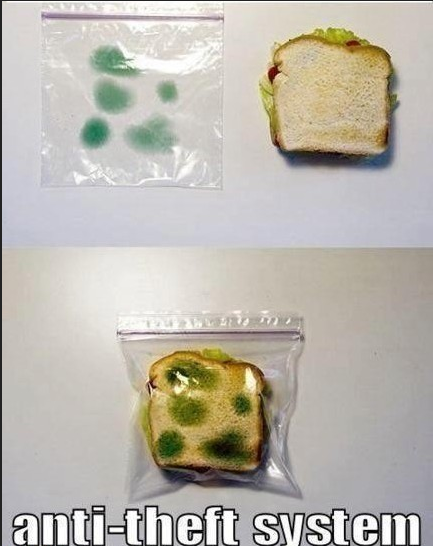
A Tuna Sandwich Named Kevin

I just recently saw one of those cute little sayings on Facebook that said, “Strange new trend at the
office. People putting names on food in the company fridge. Today I had a tuna sandwich named Kevin”.
As funny as that sounds, it’s actually pretty accurate. And that’s not so funny. Whether it’s a sandwich, an employee or personal space in the “cube farm”, R-E-S-P-E-C-T seems to be often missing. With a lack of respect comes a lack of trust. With a lack of trust comes an unproductive office. Oh yes, creativity also takes a hit.

Did I mention that teamwork suffers, as does enthusiasm and commitment to the organization? Let's not forget that customer service suffers. Motivation decreases, and so does communication.

Seems to be a trend here. Instead of having to deal with all of these negatives, why not show some respect for your employees and colleagues and turn those negatives into positives?

Tuesday, April 7, 2015

Chess Not Checkers

A book worth the wait with no disappointment.  I’m talking about Mark Miller’s new book, Chess Not
Checkers: Elevate Your Leadership Game.  There are a handful of authors that I look forward to new books from, and Mark is definitely in that class.

Blake Brown is back in this easy to read, easy to follow, hard to put down story about learning how to go from the “fun, highly reactionary game” of leadership checkers to the strategy, unique abilities, and heightened focus of leadership chess.  Mark’s leadership experience and knowledge shines through as I find myself nodding my head up and down as I read these intuitive concepts.  I can tell that he’s been there and done that, and that’s a big draw to any of his books.  Most of us can only dream about having mentors like the story’s Debbie and Jack.  Now we can, at least on paper.

There are so many lessons to be learned that I couldn’t even begin to speak in depth to them.  You just need to pick up a copy (and extra’s for your team) and find out for yourself.

Wednesday, March 18, 2015

Dare to Serve . . . I Dare You


As soon as I read the table of contents I could tell I was going to like this book.  Part 1 -Whom will we serve? What is the daring destination?  Why do we do this work?  How will we work together?

I’m talking about Cheryl Bachelder’s new book, Dare to Serve: How to Drive Superior Results by Serving Others.  You may know her as the CEO of Popeye’s Louisiana Kitchen.  A CEO with a new way to lead that, in seven years, increased profits by 40%.  Leadership style.  No fancy gimmicks.  Just Dare to Serve leadership.

One of my favorite parts of the book is the Starship exercise that "revealed some remarkably simple lessons in leading high-performance teams." These are five things that make me stop and shake my head, thinking, why don't more leaders do this? Focus on team member strengths, determine skill gaps, respect different talents. This is why Popeyes Franchise Owner Survey results changed so dramatically in five years.

With reflection questions throughout to keep you engaged and thinking, this is a book that any leader will gain insight from.  Some people just don’t grasp the idea of servant leadership, thinking they have to roll over and become submissive.  If this is you, pick up Dare to Serve and see what it’s really about.  Learn to serve others with humility, courage, and passion.  All while increasing productivity and profits.

As Cheryl says in the book, “avoid the spotlight”.  “A leader without personal responsibility remains stuck in the spotlight and fails to serve others well.”  Look at yourself in the mirror, and Dare to Serve others.

Tuesday, February 10, 2015

Sprinkles - It's What They Want

What an absolute joy to read.  Chip Bell’s new book, Sprinkles: Creating Awesome Experiences Through Innovative Service, kept a smile on my face the whole way through.


As a customer service program/training developer, I’m always looking for new ideas and twists.  Looking at it from the perspective of a fun food that (most) everyone likes is brilliant.  It’s so easy to identify with.  Customers aren’t so brand loyal anymore.  They don’t want just everyday service.  They want it “a la mode”.  They want crushed graham crackers (my favorite), cherry’s, chocolate, candy, . . . they want sprinkles.

Walt Disney once said, “Do what you do so well that they will want to see it again and bring their friends”.  People will talk about your great service.  They won’t talk about you if you’re just, meh.  You have to add that extra sprinkle.

There are so many wonderfully entertaining stories, examples, and inspirations in this book that you’ll want to share it with others.  You won’t just want to share the book but actually start implementing some of the ideas Chip speaks about.  This is the type of book that reignites.  Reignites thinking, reignites desire, reignites the spirit of why you’re in business in the first place.

Wednesday, July 9, 2014

Rebuild Yourself

How many of you have ever been in the military? What’s the basic premise of boot camp? They break you down and build you back up “properly”. It doesn’t matter who you are or
where you came from, the best way - and quickest - to build you into a military leader is to knock you back and send you on a different path which will make you “all that you can be”. The next time you Google ‘leaders’, count how many military people - and not just officers - are included.
Sometimes you don’t realize it but you might just need a reality check - kind of like boot camp. Check out the tough love, tell it like it is books by Larry Winget. In his book, People Are Idiots and I Can Prove It!, Winget lays out a list for change for you:
  • Decide to change,
  • Know why it is important for you to change,
  • Be willing to do whatever it takes to change,
  • Do whatever it takes to change,
  • When you fail, dust yourself off and start again,
  • When you get there, celebrate!,
  • Move on, and
  • Become totally committed.
Make the decision, do what it takes, celebrate (don’t forget that one), and commit. Like the old Nike slogan says, “Just Do It”.
Remember - in whatever you’re doing, or will do, you just may fail or not live up to your own expectations - you’re a leader, not a robot. A true leader will be prepared for this and will be able to “dust yourself off and start again”.

Thursday, June 12, 2014

Sprint Empowers "Social Media Ninjas" to Help in Turnaround

Today I'm happy and privileged to host a blog post by Bob Thompson, author of Hooked on Customers.

In 2007, Sprint’s customer satisfaction rating was 61, worst in the wireless telecom industry by a wide margin. Fast forward five years and CEO Dan Hesse had accomplished an amazing turnaround. Sprint’s ACSI score climbed ten points to an industry-leading 71—the biggest improvement of any company in any industry—and was ranked number one in call center satisfaction.

How did Hesse do it? Given the bleak situation, he could have continued to slash costs, hunker down, and hope for a buyer to rescue the company. Instead, taking a customer-centric approach, he directed the organization to fix its customer service problems and innovate to increase value to customers.

No doubt low morale was a factor in poor customer experiences. In the commentary surrounding the "Sprint 1000" debacle (the company fired customers due to excessive support requests), many said that the calls were the result of dealing with Sprint employees who could not take care of a problem, getting transferred around, and even being dropped and having to call back. In short, customers wanted more “one and done” calls.

I’ve written previously that authority, insights, and motivation are key to empowering call center agents to improve first call resolution (FCR) and delight customers. Sprint has invested in an array of call center technologies and software applications to help agents resolve service requests more effectively. However, it’s not clear that any specific solution had a transformative impact. Rather, it was Hesse’s decision to make customer experience a corporate goal, and the use of analytics to focus on the right problems, that made the biggest difference, in my view.

I do think Sprint made innovative use of social media to empower its employees to serve as “ambassadors” for the company. An offshoot of its “Employees Helping Customers” initiative, Social Media Ninjas was launched in 2010 to help improve Sprint’s reputation using social media sites like Facebook, Twitter, and YouTube. Jennifer Sniderman, Sprint’s group manager of employee communications, said the program was inspired by discussions about “how to leverage outreach to customers as a competitive advantage.” Customers were taking to social media to vent about problems, so why not equip Sprint employees to engage and help? Sniderman said Ninjas were asked to “have an authentic conversation, talk about what you know, be friendly, help when you can, and answer questions.”

All too often, support issues are dumped on the contact center, including problems created in product development, marketing, or elsewhere. Sprint’s Social Media Ninjas program is a brilliant use of social media to unleash the influence of thousands of employees to rebuild its brand. As of December 2012, 2,700 Ninjas were helping to improve Sprint’s reputation using their personal networks to engage with customers. Inviting all employees to lend a hand helping customers also sends a message that delivering a great customer experience is everyone’s responsibility.

By 2013 employee morale had noticeably improved. On Glassdoor, one account executive employed for eight years called his experience a “wild, awesome ride” and gives Sprint management good marks for innovation, cleaning out poor performers, and listening to employees. Hesse has earned a 79 percent approval rating, significantly better than his peers at major wireless carriers.

About Bob
Bob Thompson is an international authority on customer-centric business management who has researched and shaped leading industry trends since 1998. He is founder and CEO of CustomerThink Corporation, an independent research and publishing firm, and founder and editor-in-chief of CustomerThink.com, the world's largest online community dedicated to helping business leaders develop and implement customer-centric business strategies. His book Hooked on Customers (April 2014) reveals the five habits of leading customer-centric firms.

For more information visit
http://hookedoncustomers.com

Monday, March 31, 2014

The Idea-Driven Organization

Finally!  Someone wrote a great book about what I’m always talking about.  Alan Robinson
and Dean Schroeder’s new book, The Idea-Driven Organization should be read by all managers, executives and business owners.

The authors start out stating that, “Most managers have difficulty believing that there is enough value in employee ideas to justify the effort of going after them”.  But, “some 80 percent of an organization’s potential for improvement lies in front-line ideas”.

Hellooooo.  Anyone who thinks otherwise is totally off-base.  The people that know the most are on the front lines – the people doing the jobs.  They see the everyday in’s and out’s – what doesn’t work or how it could work better.

I’m not bashing consultant’s (most of them anyway), but your own people have far more working knowledge.  Start there.  Great leaders make great things happen and Robinson and Schroeder show HOW to make things happen by implementing employee generated ideas.

The key is in creating an environment in which employee’s feel comfortable submitting ideas.  Not just one, but multiple ideas.  This book shows you how to take off the blinders to become open to ideas.  For one, take a look at those stuffy, idea-quelling SOP’s to see what kind of impact (positively OR negatively) they’re actually making.


There are so many great stories/examples from around the world, and thought provoking ideas to implement, that you’ll be ready to make drastic changes to your organization before you’re half way done reading.

Friday, March 14, 2014

You CAN Be Successful

It’s easy to look at famous people and assume that they must have stumbled onto
overnight success somehow. We think they were born with amazing talent that was immediately appreciated by the world. Unfortunately, this makes it easy to think that if you’re not successful by now, there’s no point in trying.

Of course, this isn’t true, even though it may seem that way. It’s always good to be reminded that even the biggest successes are almost always preceded by numerous failures, and that persistence is the key to eventually being a success.

Not everyone who's on top today got there with success after success. More often than not, those who history best remembers were faced with numerous obstacles that forced them to work harder and show more determination than others.


Most of us live with the fear of failure. We’re afraid of attempting something and failing in front of our peers or our loved ones. We’re afraid of being embarrassed so instead of creating a situation in which we could fail again, we give up and stop trying, creating a comfort zone for ourselves. A comfort zone that limits what we can become and limits what we can do in life. It’s time to break out of your comfort zone and try again.

When you have a moment, Google some of these people with the word "failures":
Walt Disney
Abraham Lincoln
Harland Sanders
J.K. Rowling
Winston Churchill

Tuesday, October 1, 2013

Take Charge of Your Talent

A win-win book on talent development – taking charge of your own talent development while, at
the same time, still supporting others.

Too often, as leaders, we’re focused on the development of others more than we are ourselves.  Well, it’s time to lasso in some of that energy to focus on us.  In their new book, Take Charge of Your Talent, Don Maruska and Jay Perry show us just how to do that.

All of us, whether the CEO or the kid that just started out of high school, has untapped skills and creative talent.  We all just need some help in pulling it out.  Take Charge of Your Talent provides a game plan to find the, ever present, opportunities that we may not see.

The steps and ideas included in this book are so easily profound that you can immediately begin to harvest the talent you have dormant.  For instance, by taking a look at yourself with the Take Charge Checklist, a tool that will propel you immediately into the process of improvement.


It doesn’t matter where you sit on the ladder, or even if you're on the ladder yet . . . you have untapped talent.  I would recommend this book for everyone, no matter what business you’re in . . . even if you’re just coming up.  You’ll learn that you can do things that you never had thought of.

Monday, September 2, 2013

Innovative Service Starts Here

When I'm given a small motivational type of book to read, I'm usually just expecting a quick read of motivational quotes with nothing really new.  Such is not the case with Chip Bell's new book The 9 1/2 Principles of Innovative Service.  Published by SimpleTruths, this has got to be one of the best books I've read of this type.

Chip's book is full of easy to implement ideas to delight customers.  It's written, not as basic ideas for you to figure out, but as inspiration with actual practical use that can be easily and quickly tailored to your type of organization.  Working off the premise that "Tough economic times call for a new approach: value-unique service", he provides us with a multitude of examples of companies that have made it to the top with their unique customer service thinking.

Never forget that customers have options, so you need to add the extra to ordinary.  This book is one that you'll want to share with your employees because there are so many sparks of imagination in it that your employees will be coming up with many of their own innovations.  With that comes more ownership, which drives better service.

Tuesday, June 4, 2013

Mentoring is a Partnership

Explain “mentoring” to me . . . uh-huh, that’s what I thought.  Most leaders have a vague understanding of what mentoring is, and few know just how it’s done.
 
In today's world of employee's moving from organization to organization, mentoring has become a top priority in keeping and developing their talent. If you want to help your employees grow - while holding on to them longer, you have to mentor. Enter the revised and expanded edition of, Managers as Mentors: Building Partnerships for Learning, by Chip Bell and Marshall Goldsmith - an easy to understand handbook for creating great relationships and talent.
 
All the information is here to create a self-directed learner, from planning, to rapport, discovery, and ensuring the transfer of learning.  Mixed in with the 27 chapters are fitting case studies to help pull everything together.  One of the things that I liked most of all was, The Mentor’s Toolkit, at the end.  A short series of assessments, FAQs, and stories to help you promote and support continuous improvement.
 
As Bell and Goldsmith say in the book, “Mentors practice their skills with a combination of never-ending compassion, crystal-clear communication, and a sincere joy in the role of being a helper along a journey toward mastering”.  And how do you get there?  Read and use this book as a guideline and you’ll be well on your way.

Monday, March 18, 2013

Fred 2.0


You may have noticed I’ve been reviewing quite a few books lately.  I started off last week with a little pause in reading before the next one, just to be contacted about reviewing another brand new book.  And am I glad I said yes!

Mark Sanborn’s new book, Fred 2.0, is a follow up to his 2004 best seller, The Fred Factor.  Seldom have I ever read a success/leadership/motivation book that hits an emotional cord like this one.

The Fred Factor has been used by countless organizations, big and small, for the last decade, to impact their service and overall employee inspirations.  Fred 2.0 is bound for the same success.

Fred 2.0 is full of new, inspiring and energizing examples of people that are committed to taking ownership of their own greater service.  Mark, again, shows us that you don’t need any big budgets, training, or much of anything for that matter, to be extraordinary.  The chapter names themselves give you a good idea of what’s in store for you:
  • ·      Work with Passion,
  • ·      Develop Your Difference,
  • ·      Elevate the Experience,
  • ·      Renew Your Resolve.

The book starts right off with outstanding ideas to think about, like, “someone who does an ordinary job in an extraordinary way can have such a powerful impact on people”.  I doesn’t matter how small or “normal” you think your job may be, YOU can make it extraordinary and YOU can make a difference in others lives.  Just choose to be better than “normal”, choose to be extraordinary.

The Fred’s of the world do what they do because they know it’s the right thing to do.  Mark goes on to say that, “Being a Fred isn’t about the job you hold but how you do the job”.  You’ll learn this from “ordinary” people such as a forklift driver, a dentist, a butcher, and many more, that you have the tools you need to be extraordinary, inside of you already. 

This is a book that you’re going to want to jump on and get started.  And I wouldn’t doubt that you’ll end up picking up a few copies for your friends or co-workers.

Monday, January 28, 2013

Communication and Partnerships

Fostering a sense of partnership with your employee's is an important aspect of motivation. People typically want to do good and feel like they belong. Don't just focus on the success of the company or your management team. Realize that you can't be a successful leader and try to do everything yourself. The increased success of you and your company relies on the future success of the employee's.

Continuous communication is a must if you want employee's to develop and succeed - or help your company succeed. You need to take a proactive role in looking at what's required. Take a look at any types of barriers there are to success. This very often has to do with a lack of communication or hoarding of power. If you hoard power and knowledge, someone's not getting information they need that may increase productivity and quality of work.

A former manager of customer satisfaction at Disney summed up success like this:
"Recruit the right people, train them, continually communicate with them, ask their opinions, involve them, recognize them and celebrate with them. If you show respect for their opinions and involvement, they will be proud of what they do and they'll deliver quality service."

Don't forget about your new employee's once the next crop comes in. Set them up with a mentor - be a mentor - to help them grow from the start and continue to grow. They're going to need guidance while they're getting used to their jobs and responsibilities. Communicate and be visible from the get go. Show new people that you're glad to have them aboard and that their jobs are just as important as anyone elses.


Too often we see organizations put on their orientation program, send employees to their departments, they meet their supervisor, they get to work - only to see their supervisor again when something goes wrong.  That in itself is wrong. In order to keep people motivated leaders must continuously communicate and show they care. Even if there's no news to share, let people know that. Remember - if employees hear nothing, they'll make up things to fill in the gaps.

"We're all in this together", so keep the communication and visibility up.  Make sure you "take them" (new employees) to the corporate culture - don't let the culture come to them. That never really works out very well. That will be a topic for another day.

Labels