Showing posts with label teamwork. Show all posts

Saturday, January 16, 2021

Creating Magic

As I’ve gotten back into blogging, I’ve been looking back at my favorite book reviews and realized I never wrote an actual review on my, probably all-time, favorite, Creating Magic: 10 Common Sense Leadership Strategies From a Life at Disney, by Lee Cockerell. I’ve mentioned it more than a few times but it deserves more.

Creating Magic probably took me twice as long to read, just because I did so much highlighting throughout. I have a good size personal library of leadership and customer service books and it is, by far, my most loaned out book.

This is the perfect book for any leader working in, or interested in, the service industry, and for that matter, any industry. After starting out his career as a much more hard-nosed manager, Lee has become the model of great leadership building immediate rapport with employees. He holds nothing back in this book, describing each job along his path and what he had to change about himself to become a successful leader.

One of my favorite quotes is actually the very first line of the book, “It’s not the magic that makes it work; it’s the way we work that makes it magic.” Following the 10 strategies of the book, Lee was able to become a highly-skilled, efficient, and admired leader as Executive Vice-President, Operations of Walt Disney World Resort. Those 10 Strategies are:

#1 - Remember, everyone is important

#2 - Break the mold

#3 - Make your people your brand

#4 - Create magic through training

#5 - Eliminate hassles

#6 - Learn the truth

#7 - Burn the free fuel

#8 - Stay ahead of the pack

#9 - Be careful what you say and do

#10 - Develop character.

These strategies can easily be implemented by the smallest business owner all the way to the Fortune 500 CEO. It’s the way that people are treated that makes any business, and Lee Cockerell gives you the common sense approach and inspiration to make it a reality.


Wednesday, April 19, 2017

Plan Every Day in Advance

What a fantastic guest blogger I have today. Brian Tracy has been a huge influence to so
many people in achieving personal and business goals. His 3rd edition (out this week) of Eat That Frog is just one part of that mold. Here's a great book that's going to help you to stop that procrastinating. Admit it. We all do it. With Brian's book, with 2 new chapters, you'll learn that you don't need to do everything to be successful and that in trying to you lose focus and begin to drop the ball. Share this book with your entire team.

Plan Every Day in Advance
By Brian Tracy

The following post is an excerpt from chapter 2 of Eat That Frog.
A word about frogs… It has been said that if the first thing you do each morning is to eat a live frog, you can go through the day with the satisfaction of knowing that that is probably the worst thing that is going to happen to you all day long. Your “frog” is your biggest, most important task, the one you are most likely to procrastinate on if you don’t do something about it. It is also the one task that can have the greatest positive impact on your life and results at the moment.

Plan Every Day in Advance
You have heard the old question, “How do you eat an elephant?” The answer is “One bite at a time!”
How do you eat your biggest, ugliest frog? The same way: you break it down into specific step-by-step activities and then you start on the first one.

Your mind, your ability to think, plan, and decide, is your most powerful tool for overcoming procrastination and increasing your productivity. Your ability to set goals, make plans, and take action on them determines the course of your life. The very act of thinking and planning unlocks your mental powers, triggers your creativity, and increases your mental and physical energies.
Conversely, as Alec Mackenzie wrote, “Taking action without thinking things through is a prime source of problems.”

Your ability to make good plans before you act is a measure of your overall competence. The better the plan you have, the easier it is for you to overcome procrastination, to get started, to eat your frog, and then to keep going.

One of your top goals at work should be to get the highest possible return on your investment of your mental, emotional, and physical energy. The good news is that every minute spent in planning saves as many as ten minutes in execution. It takes only about 10 to 12 minutes for you to plan your day, but this small investment of time will save you up to two hours (100 to 120 minutes) in wasted time and diffuse effort throughout the day.

You may have heard of the Six-P Formula. It says, “Proper Prior Planning Prevents Poor Performance.”

When you consider how helpful planning can be in increasing your productivity and performance, it is amazing how few people practice it every single day. And planning is really quite simple to do. All you need is a piece of paper and a pen. The most sophisticated Outlook system, computer app, or time planner is based on the same principle. It is based on your sitting down and making a list of everything you have to do before you begin.

One of the most important rules of personal effectiveness is the 10/90 Rule. This rule says that the first 10 percent of time that you spend planning and organizing your work before you begin will save you as much as 90 percent of the time in getting the job done once you get started. You only have to try this rule once to prove it to yourself.

When you plan each day in advance, you will find it much easier to get going and to keep going. The work will go faster and smoother than ever before. You will feel more powerful and competent. You will get more done faster than you thought possible. Eventually, you will become unstoppable.


Brian Tracy is one of the top business speakers in the world today. He has designed and presented seminars for more than 1,000 large companies and more than 10,000 small and medium- sized enterprises in 75 countries on the subjects of Leadership, Management, Professional Selling, Business Model Reinvention, and Profit Improvement. He has addressed more than 5,000,000 people in more than 5,000 talks and presentations worldwide. He currently speaks to 250,000 people per year. His fast-moving, entertaining video-based training programs are taught in 38 countries.

In addition to Eat That Frog, Brian has written more than 80 books that have been translated into 42 languages, including Kiss That Frog!, Find Your Balance Point, Goals!, Flight Plan, Maximum Achievement, No Excuses!, Advanced Selling Strategies, and How the Best Leaders Lead. He is happily married, with four children and five grandchildren. He is the president of Brian Tracy International and lives in Solana Beach, California. He can be reached at briantracy@briantracy.com.

Tuesday, February 14, 2017

Surprise Me!

Chip Bell has done it again! I so anticipate getting his newest book releases in the mail
and his newest, Kaleidoscope: Delivering Innovative Service That Sparkles, was worth waiting for. Chip's writing style of giving us inspiring stories of actual people and organizations getting customer service right makes reading interesting and thought-provoking. Even if you're not in the customer service industry, you'll find this book worth a good read.

Today, I have the privilege of hosting a Chip Bell blog post.

Surprise Me! by: Chip R. Bell
How would you like receiving a birthday present without any wrapping or colorful bow...just a Post-it note on the present with handwritten: “Happy Birthday?”  What would an Easter egg hunt be like if the location of all the eggs were clearly marked with a red flag?  How exciting would a treasure hunt be if some else did if for you and just brought you the bounty?

Customers today live in an over-stimulated, highly entertained world and love surprise. Unfortunately, we have so automated, programmed and managed surprise that it is now assumed when it was once upon a time enchanting.  Remember a time when a front desk clerk, rental car agent, airline gate attendant, merchant or waiter enchanted us with an unanticipated value-added something.  It had a neighborly, old-fashioned feeling when we got an extra.  The mechanic fixed something broken while servicing our vehicle and wrote “no charge” on the invoice.  We heard words like, “It’s on the house” or “we’ll comp it!”

Then, the world of unexpected extras pretty much came to an end.  Easily blamed on the tough economy, the shift was more subtle.  Extras were not actually taken away, they were managed away.  The extremes of a “no variance” philosophy from TQM and Six Sigma got pushed way beyond its rank and pay grade requiring the frontline to hand over their spontaneous generosity to the computer.  Now, the computer, not the gate agent, decides if you get that first class seat upgrade based on your frequent flyer status and seat availability.  Getting upgraded to the concierge level at a hotel is a  computer-driven decision based solely on availability and affinity program status and not the judgment call of the desk clerk.

And, the customer, robbed of that Jack-in-the-box feeling of surprise, has simply built the expectation of an extra into their criteria for satisfaction much like the cleanliness of a hospital or the security of a bank.  Value-added has become value-assumed and no longer a loyalty-creating value at all.  Proof that it has become a given not an extra is how easily the customer is disappointed when he or she fails to get what was once presented as a true surprise.

It is time to bring back the trust and authority the frontline needs to be both generous and ingenious.  If the Ritz-Carlton can trust a housekeeper to responsibly spend up to $2000 to make sure a guest leaves happy, the waiter can be trusted with the decision to comp a dessert for a loyal customer. Employees who can successfully manage a family budget, juggle soccer, tutoring and baseball practice schedules, and shop for groceries can figure out ways to surprise customers without jeopardizing the unit standards or the bottom line. 

Turning ho-hum service into a compelling story customers are eager to share requires bringing back a setting lined in trust; a place filled with joyful innovation.  It takes leaders who are as courageous as they want their employees to be creative. It calls for leaders in search of invention, not obedience.


Chip R. Bell is a renowned keynote speaker and the author of several national best-selling books. His newest book is the just-released Kaleidoscope:  Delivering Innovative Service That Sparkles. He can be reached at chipbell.com. 

Thursday, July 7, 2016

Leaders Ready Now

Last week saw the launch of a highly anticipated (and deservedly so) book, Leaders Ready Now: Accelerating Growth in a Faster World, by Matthew J Paese, Audrey B. Smith, and William C. Byham.  If you get half out of what I did, you'll be well on your way in your growth as a leader.

My guest blogger this week is actually by three.  The three authors of this great new book.

Why Are You Pursuing Acceleration?
The business reason for acceleration is often summarized like this: “We’re running
desperately short of leaders, and if we can’t get more of them—good ones—very soon, we’ll be in trouble. It’s not an option to buy talent from the outside, so we have only two options: grow from within or fail.”

This usually causes management to sit up straight and pay close attention to the next part of the meeting: How to solve this? What most executives are thinking at this point is basically what’s going through their heads when the organization faces a quality problem or a service problem or a cost problem: We need to analyze the causes, develop solutions, and execute a plan.

Except that acceleration is different. An organization can fix a quality, service, or cost problem with new and better processes that people learn to execute with discipline. But a leadership shortage will be filled only with energy for growth—fear and excitement—which then fuels the process and discipline that an acceleration system also requires. So, aiming to solve the talent problem demands a plan to solve the energy problem.
Energy will grow as you take on more risk with developing your people. But bigger risks require bigger whys. Why grow? Why accelerate? For management, the why is the business case for acceleration. In the absence of a strong one, it is difficult to convince senior executives to take any risks (much less big ones) with development. In fact, acceleration isn’t appropriate for every organization (e.g., companies in rapid start-up mode may need to emphasize talent acquisition, while others may be stocked with so much talent that the main challenge is retention).

For individual leaders, the why is the personal case for acceleration. Without one, it is difficult to convince individuals to take big chances with their own development. The typical conversation with an individual leader highlights the potentially exciting, lucrative, and influential future that acceleration can bring; the leader can—if the process works—learn, earn, and determine much more in the organization. For most, this would be enough to garner full interest and enthusiasm for whatever may come next. But interest and enthusiasm are simply not enough. Remember that the most powerful learning experiences— the ones that truly transform leadership capability—are characterized less by design than by necessity. When asked how they came into their moments of rapid learning, leaders routinely report reasons such as, “They needed me, and I was the only one available who could do it,” or “I thought I could make a big difference,” or “My boss believed I could do it, so I agreed.”

When it comes to creating energy for acceleration, there is a vast difference between “You could benefit from this” and “We need you.” To create a more powerful why for both management and individual learners, it is insufficient to make a case on behalf of only the business or the person. You will need to appeal to both. “We (the business) need you (the person) to take a big chance.” Your case must be compelling to both management and each individual, conveying why the organization needs leaders to step up, what it needs from each leader, and why it’s worth taking big risks to achieve faster, more significant growth.

*****
Matthew J. Paese, Ph.D., is Vice President of Succession and C-Suite Services for Development Dimensions International (DDI). Matt’s work has centered on the application of succession, assessment, and development approaches as they apply to boards, CEOs, senior management teams, and leaders across the pipeline. He consults, coaches, speaks, and conducts research around all those topics and more.
Audrey B. Smith, Ph.D., is Senior Vice President for Global Talent Diagnostics at DDI. Audrey's customer-driven innovation and global consulting insights have helped shape DDI's succession, selection, and development offerings, from the C-suite to the front line. She has been a key strategist and solution architect, encompassing technology-enabled virtual assessments and development aligned to current business challenges.
William C. Byham, Ph.D., is Executive Chairman of DDI. He cofounded the company in 1970 and has worked with hundreds of the world's largest organizations on executive assessment, executive development, and succession management. Bill authored Zapp!® The Lightning of Empowerment, a groundbreaking book that has sold more than 3 million copies. He has coauthored 23 other books, including seminal works on the assessment center method.


Tuesday, September 29, 2015

Time for Co-Active Leadership

Easy to read.  Quick to read.  Powerful learning.  Unlike so many leadership books, Co-Active Leadership: Five Ways to Lead, by Karen and Henry Kimsey-House breaks down
leadership into an easy to understand and implement model.  The Co-Active Leadership Model is broken down into the Co-Active Leader Within, in Front, Behind, Beside, and in the Field.  Before you even start reading, you have a good idea where it’s going which helps you understand even better.  A big focus on who we are, what matters, and making connections.

Leadership is not just about standing within your own bubble and outwardly directing.  This book shows us how to get over that, and to become a complete responsible leader that others want. It's just the size and type of book that's perfect to use for a leadership development program full of people who "don't have time". Once they read Co-Active Leadership they'll be asking for more. . . . . Maybe Co-Active Coaching?

Monday, May 11, 2015

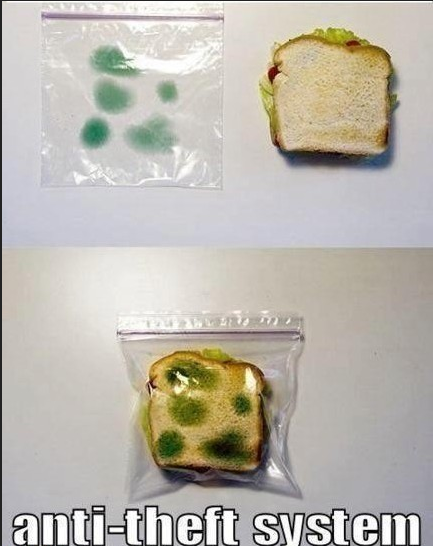
A Tuna Sandwich Named Kevin

I just recently saw one of those cute little sayings on Facebook that said, “Strange new trend at the
office. People putting names on food in the company fridge. Today I had a tuna sandwich named Kevin”.
As funny as that sounds, it’s actually pretty accurate. And that’s not so funny. Whether it’s a sandwich, an employee or personal space in the “cube farm”, R-E-S-P-E-C-T seems to be often missing. With a lack of respect comes a lack of trust. With a lack of trust comes an unproductive office. Oh yes, creativity also takes a hit.

Did I mention that teamwork suffers, as does enthusiasm and commitment to the organization? Let's not forget that customer service suffers. Motivation decreases, and so does communication.

Seems to be a trend here. Instead of having to deal with all of these negatives, why not show some respect for your employees and colleagues and turn those negatives into positives?

Wednesday, January 7, 2015

I Love a Spicy Meatball

Yes, I love a spicy meatball . . . and wings, and dips, and pizza.  But they sometimes rub 
me the wrong way, if you get my drift.  Spicy is good.  Too spicy is bad.

Kind of like people.  You've heard the saying, "If you're the smartest person in the room, you're in the wrong room".  Don't be the equalizer.  You've got to add some spice to the room.  But you can't just do it randomly.  Just like spicy foods, if someone on the team is too spicy, you're going to have problems.

A good spicy team member is going to communicate, share openly and willingly, question ideas/decisions, and be honest and straight forward.  But to keep from becoming too spicy, he/she's also going to actively treat others with respect and be supportive.

You don't want all yes wo/men on your teams.  You'll never improve to the degree that you need to keep up.  Spicy people are a key.  You need people to keep things active and to keep everyone's minds flowing and thinking.  The first idea isn't always the best.  In fact, it usually isn't.  You need quality discussion.

Walt Disney once said that, "Ideas come from curiosity".  When setting up teams, take care to really look at everyone you're considering.  You need people that exhibit curiosity.  Spice it up a bit and get a good mix.  A good mix equals good results.

Wednesday, October 1, 2014

Customer Service? But They're Co-Workers!


What all employee's need to realize is that INTERNAL customer service is just as important as external.  Everyone is a customer of someone else.  It's not rocket science.  Just think about these 3 simple factors to provide better quality service:
Respect:
Everyone has their job for a reason.  While all members of a team may not contribute equally, each is considered equally important.
When you give respect, you earn respect.

Interdependency:
It's not a one man show.  We can only truly succeed when our entire organization succeeds.
When you are there for someone, someone will be there for you.

Reciprocity:
“What goes around, comes around”.  Usually, this is used negatively.  With a winning team, it's in reference to mutual benefit and support.
When you're willing to give assistance, support, caring, and benefit of the doubt, you'll also receive the same in return.

 Give a little - gain a lot!

Friday, September 12, 2014

Muffin Communication

I had a good laugh the other day while I was reminiscing.  I was my director's second in command.  She was someone I had a good working relationship with and often stood in for her for meetings and decision making.
Around Christmas time one year she was out of town for about 10 days or so.  On her very first day out of the office another director had dropped off some homemade muffins to her - muffins that, the directors, looked forward to every year. . . . I think you know where I'm going here.

Obviously, they would be stale before she got back so everyone in the office turned to me . . . almost in unison.  "Make an executive decision", they all said.  "It would be a shame to let them all get old."  So a decision I made.  They were delicious.

When our boss got back she was asked how the muffins were.  "Huh, what muffins?"  She wasn't too happy, and after everyone in the office pointed, went looking for - you guessed it - me.

Well after I made my many apologies - and hearing snickers from around the corner - I explained the reasoning behind it, and to make a long story short, everything was good.

This is a pretty light hearted example but it could have been something way worse.  Point is, this confrontation could have been avoided with an email, voice message, or even a sticky note.  Sometimes you need to make those executive decisions.  But ALWAYS be sure you keep the communication lines open.

Friday, August 22, 2014

Storyboard That Idea!

The storyboarding process actually started with Leonardo da Vinci but was revitalized and developed at the Walt Disney Studios in 1929 with the creation of Steamboat Willie. Since that time it has grown in popularity in movie and animation studios and has also moved into mainstream business.

Walt Disney World itself was planned exclusively via storyboarding in about 10 days. Walt Disney and Mike Vance saw that storyboarding could be adapted effectively for business planning in a mode they termed “displayed thinking.” Displayed thinking can be used for group problem-solving and strategic planning, such as in:

·         Decision Making
·         Strategic Planning
·         Decision Execution
·         Building Consensus and Buy-in
·         Processing Large Amounts of Information
·         Making the Plan Visible While it is Executed

There are 13 basic steps to the typical storyboarding process. You can just as easily go through this yourself for an individual project as you can with a group for a larger project. This is outlined well by the Iowa State University Extension:

1. State the Problem.
Be specific and concise.

2. Brainstorm and Post all Ideas.
Each idea is written in large letters on a separate card or piece of paper.

3. Share Ideas.
Participants talk about what they have written on the cards.

4. Review Each Card for Meaning.
Ask for clarification.

5. Sorting By Content.
In silence, participants begin sorting and grouping the items of similar content.

6. “Header Cards” Added.
Participants are given several “header cards” that are larger (and a different color) than the idea cards previously used.

7. Total Group Discusses the Groupings.
There may be a need to break some of the topics into smaller sub-topics.

8. “Symptoms” vs. “Causes.”
The focus should be on the root causes of the problem, not causes.

9. Vote for Consensus.
The group identifies the top three or four ideas.

10. Restate Header Cards Using A Verb.
Replace a noun with a verb.

11. Subtier Actions.
If subtier actions are necessary, post them under the header cards.

12. Assign Completion Date.
Assign a completion date to each item.

13. Post Dates and Name of Person Responsible.
Post dates and the name of the person responsible for each action item.

“Tell” instructions and half of them will be forgotten – tell a story and it will remembered.

Thursday, July 17, 2014

Change Doesn't Have to Hurt


To have success with change requires flexibility and adaptability. If you can grab the reins and act as a change leader yourself, you’ll be personally helping in leading the organization to great achievements.

With change normally comes resistance. In order to lead change you need to know just what kinds of resistance there are. Here are just a few, listed in “Individual Resistance from Employees to Organizational Change”, by Dr. Chuang,Yuh-Shy:
·         Personal loss. Right or wrong, people are afraid they’ll lose something, particularly job security and pay.
·         Loss of pride and satisfaction. A concern about ending up with jobs that no longer require their abilities and skills.
·         Reduced responsibility. Jobs will be reduced to menial tasks without responsibility.
·         Loss of status. Loss of job titles, responsibility, or authority.

But on the other hand, there are probably more positive things to think about than negative.

Yuh-Shy lists things such as:
·         Personal gain. New job titles, more responsibility, more money, and more authority.
·         More security. Greater job security because of the need for increased skills. Possible salary increases.
·         More status/prestige. Possibly a new title or new office.
·         More responsibility or authority. Maybe new responsibility or a new supervisor who assigns more responsibility than the previous one did. This could lead to future promotions.

You know, if you really think about it, people actually love change. People constantly pursue promotions and new job responsibilities; buy personal development books and start their own businesses. They change careers, jobs, and even organizations – all in the name of change.

People love change – they just hate having to be forced to change.

You can help guide change no matter where you fall in the organizational chart. Being a change leader can put you in the position of being someone who has greater career potential. Christina Tangora Schlachter and Terry Hildebrandt, authors of “Leading Business Change For Dummies” say that you can begin to spark positive change by doing one simple thing . . . becoming proactive.

Wednesday, February 20, 2013

The Secret of Teams

What a busy few weeks of book reading. I received a re-launch book to read on the secret of teams. I thought, "hmmmm, what could possibly be new". Well, wasn't I surprised?

Mark Miller's (VP Organizational Effectiveness, Chick-fil-A) book, The Secret of Teams, surprised the heck out of me. It's written as a parable (which I'm not usually a fan of), which makes it easier to comprehend then most other books on teams. And the common sense ideas made me think, "hmm (again), why haven't I ever looked at it like that?"

Mark has an up and coming executive (Debbie Brewster) take a look at 3 very different types of teams, totally out of her business domain. What Debbie finds is that there are common threads to success and also common types of factors to look at, no matter the team or organization. Mark says that "the keys to building great teams are universal". There is no REAL secret here. You just have to stop and smell the roses in order to realize what those keys are for you.

The biggest step for anyone trying to create a successful team is changing the  "entrenched ways of thinking and acting". Along with this is - developing your staff, your team members. Teams don't fail because the want to, they fail because they don't know what it takes to succeed.

Doing things the 'way we've always done it' has been one of my biggest pet peaves over the years. Miller's book gives you the ideas and the tools to get away from the old 'tried and true'. Chances are you've tried, but it hasn't worked, and no one wants to put the effort out to try again.

My suggestion . . . my recommendation . . . is to buy The Secret of Teams for yourself and your leadership team. It may well be the best investment that some of you will ever make.

Wednesday, August 22, 2012

Recognition Linked to Performance

Bob Nelson, author of 1001 Ways to Reward Employees, completed a study a few years back on how employee recognition impacts performance and in turn assists managers in creating a productive team.

In his study, he found of managers that:
90% said recognizing employees helps them to motivate them.
84% said recognizing employees provides them with practical feedback.
80% said recognizing employees for good work makes it easier to get the work done.
78% said recognizing employees helps them to be more productive.

73% of managers said that they received the results they expected when they used employee recognition.
99% said that if they didn't get immediate results, they would eventually obtain the desired results.

Take another look at those statements.  Who's point-of-view are we looking at?  Not the employees - the managers'.  Yes, the employees desire and need recognition for their own good, but look at the production side and see that it's just plain good for you and your organization.

Monday, February 13, 2012

Leaders Look for Results Instead of Salutes

"Look for results, not salutes.” This is a great quote that comes from a chapter in Captain D. Michael Abrashoff’s book, It’s Your Ship: Management Techniques from the Best Damn Ship in the Navy. In it he describes how he broke down the time honored traditions of officer/enlisted separations. Not completely, of course, but enough to make a harmonious difference.

It takes just simple things sometimes to make a difference, and to show that you, as a manager/supervisor, are part of the team and not just the overseer. For instance, Captain Abrashoff talks about taking his place at the end of the food line at steel beach picnics (cookouts on the flight deck). This just normally is not done – officers go to the front. It wasn’t long, of course, before other officers took his cue and were doing the same thing. Going to the end of the line was one of many ways of showing his crew that he genuinely cared for them and he was working WITH them.

You can easily use these same types of techniques in civilian business. Just like the military, we also have ranks and privileges – executive parking spaces, cafeterias, even restroom’s. But take a look at the difference in where you spend most of your time. In your office – which is segregated far from the lower ranks?

I often talk about Tom Peters' concept of MBWA (management by wandering around). Step out of your hideout and become part of the team. Make it habit to eat in the break room once a week. Give staff the opportunity to talk with you freely, whether they’re happy about something or concerned. This is where new ideas and improvement comes from.

From 12/19/08

Wednesday, July 6, 2011

Cliques Gone Organized

I first learned of "tribal leadership" while reviewing the pre-launch book by Tony Hsieh, Delivering Happiness. I was curious to find out more about it when low-and-behold I received an email from the publisher of Tribal Leadership: Leveraging Natural Groups to Build a Thriving Organization (Dave Logan, John King & Halee Fischer-Wright) asking me to review the updated re-release (June 7) of the book. Awesome!

At first glance tribal leadership reminds me of cliques in school. There are various groups of kids who hang around together - preps, jocks, etc. - which you have to belong to in order to "hang" with them. As the school year progresses, so do the groups . . . or not.

LinkedIn co-founder, Reid Hoffman described Tribal Leadership as "a clear road map for the new reality of managing organizations, careers, and life". The key words here are, "new reality of managing organizations". In today's world, leaders must manage all aspects of the organization including the tribes. We have to help our people go from "they" or "I" attitudes to "we" attitudes.

The authors of Tribal Leadership take us through the five stages of building relationships between leaders, tribes and culture. It's, at times, comical because of the way tribes and leaders are described is sadly so true - reality check.

The goal of tribal leadership is to "upgrade as many people, and clusters of people, as are willing and able to move forward to Stage Four, the zone of tribal pride". A tribal leader is "someone who artfully builds his corporate tribes, then gets out of the way so people can achieve greatness".

By developing the tribe you'll create loyalty, hard workers, innovation and collaboration. Helllooo. Doesn't that make your job a bit easier? Sure it does. And just as importantly, it contributes more effectively to the success of the organization . . . and doesn't exactly hurt your own chances for advancement.

Tribes - culture - is not something that you want to "just happen". There's guidance and building that needs to be done in order for them to jive with your organization in order to create overall success.

Reading this book really opened my eyes to what was happening in my own organization. Pick up a copy of Tribal Leadership and learn how to become the leader of the tribe - go from "life sucks" to "life is great" - and you'll have that success.

Thursday, June 16, 2011

Dare to Expect

What we usually get from people is what we expect to get. If we expect greatness, we'll get greatness. If we expect mediocrity, we'll get mediocrity.

Good leaders expect the BEST from themselves and their staff. Your expectations play a huge role in your own success and they also have a profound effect on the people around you.

ATTITUDE - What you expect from your staff determines your attitude toward them. And those around you reflect your attitudes right back to you - whether those expectations and attitudes are positive or negative. Attitude out=attitude back.

How many have ever worked for, or known, someone who thinks all staff are there just for a job. They have no motivation and will take advantage of any situation that comes along? Wow - that does sound familiar. If that's what the leader believes - that's what the leader will expect - that's how their staff WILL act.

In ALL relationships with others, develop a positive outlook. One that recognizes that they have the very best of intentions - with no ulterior motives.

Hey! Here's another good reason to be positive and expect the best. According to The Longevity Quotient, by Edward L. Schneider, M.D., "researchers interviewed 800 Minnesota residents to assess and rate their optimism levels, then tracked them for 35 years to see how long they lived." And the results? "Regardless of age or sex, the optimists lived longer. The pessimists died prematurely. In fact, for every 10 percent increase in the pessimism index, there were 20 percent more early deaths." That sounds like a pretty decent reason to think positively.

Communicate your expectations! Let your team know you have faith in them, while they might not yet have enough faith on their own. Knowing your expectations of working toward their best and being a positive influence will carry everyone to higher successes.

Friday, June 10, 2011

You ARE Your Staff

You are your staff - Your staff are you. Huh? In other words, the way customers, competition, and your bosses look at you is a direct reflection of your staff . . . and visa versa.

As Lee Cockerell says in his book, Creating Magic: 10 Common Sense Leadership Strategies From a Life at Disney, "your people are your brand". As I've said before, you are not alone. Leadership is not a one way street. If you have remarkable staff, chances are you'll be looked at as remarkable. If you have lazy staff, well, you get the picture.

Just as you would work hard to choose the best materials to create a product or develop the best routine's for your CSRs, you have to choose the right people to create those products and answer those phones. It all really becomes part of your brand - the ability to make the right choices.

Lee uses a great example in his book to illustrate this: "A head chef may be a great culinary artist, but if he or she does not hire the right people, train them well, and inspire them to prepare every single dish perfectly, he or she will quickly end up cooking for one."

A key to your top branding is - hire people with leadership ability and potential. These people think - and perform - differently than your average "it's just a job" employee. They WANT to be there. They WANT to learn and succeed. They WANT the organization to succeed. They'll act as a positive influence on others and help "keep the peace". You think you're stressed? Hire the right people and watch that stress level drop.

Remember - Leadership is not a one man show. You are not alone. You CAN'T be alone. It takes some good planning and smart thinking.

Friday, March 11, 2011

Leading Happiness

This week I’m attending Disney’s Approach to Quality Service at the Disney Institute at Walt Disney World. In the last couple of days, so far, I’ve learned an incredible amount of proven service traits. I thought I knew a lot about Disney already, but wow, I had only the tip of the iceberg.

Disney is continuously translating Walt’s simple philosophies into successful business strategies.

One of the first things that stood out for me was the simplicity of the Disney Strategy:

- Exceed our Guests’ expectations,

and the Disney Tactic:

- Pay attention to every detail of the delivery.

Again, Wow – just think how successful your organization would be, just by building these two things into your culture.

Research has shown that consumers believe that about 48% of employee’s, collectively, are helpful, but don’t go the extra mile. That’s almost half, folks! If the same survey was completed, specifically, at Disney Parks, I’d be willing to bet that that percentage would be WAY less than that. Where would your employee’s fall in that same survey?

How many of you REALLY pay attention to detail? Don’t just look at things that you know your customers will see. Disney thinks that it’s better if Guests DON’T notice something rather than notice something that’s out of place or not up to standards.

For those of you who have been to the Magic Kingdom, have you ever noticed the hitching posts on Main Street? Most people I ask that of haven’t noticed them. That’s because they’re painted every night. If they weren’t, Guests would notice scratches and chips. It’s better that they aren’t noticed.

The next time you watch a Disney/Pixar movie, pause it here and there and take note of everything you see. There’s an abundance of visuals in there for everyone.

Exceeding expectations and paying attention to detail . . . two things that will make the difference between success and mediocrity.

Wednesday, December 22, 2010

Share The Milk and Cookies

Who's one of the greatest manager/leaders of all time? Look no further than the North Pole. Yes, I'm talking about Santa Claus.

One of my favorite leadership books is "The Leadership Secrets of Santa Claus-How to Get Big Things Done In YOUR "Workshop"...All Year Long". It's very easy to relate to.

Santa says that one of his biggest benefits of being him is the fact that he's on "the point". All of the elves and reindeer work their "ears and antlers off" all year so the mission and vision can be fulfilled, yet Santa's usually the one that gets all of the credit. He's the one that gets to travel all over the world, attend meet and greets, and have his picture plastered all over greeting cards. The elves and reindeer don't get to experience all the fun so "their feelings of satisfaction and accomplishment must come in different ways".

Just like you as a leader, Santa must help his elves and reindeer see the "positive differences" that they're making. He practices MBWA (management by wandering around) just like you should be doing. He shares thank you letters and posts them on a bulletin board labeled "SEE WHAT YOU MADE HAPPEN" - just like you should be doing. He uses crayons to draw diagrams showing the link between the elves and reindeer and the smiling children that get the presents - that's communication that you should be providing (maybe not with crayons though).

Nothing motivates an employee - whether elf or not - more than actually seeing that they're contributing and making a difference for the organization and their customers. So look for ways to make it happen for your staff.

Thursday, September 23, 2010

Walk That Talk

In the past, I’ve known so many supervisors and managers that talk the talk but don’t walk the walk. Good leadership means that you “walk the talk”. Leading is sometimes like raising children – sometimes there’s really not much difference at all. If you’re going to say “do as I say”, you also have to “do as you say”. That goes for any situation. You, as a leader, are on stage . . . the star of the show. You’re being watched more than you realize. In some cases, some may even call it stalking.

Over the past number of years, leaders have been getting more into the “employees are important to me” frame of mind. That’s a good thing. But at the same time, if you tell your staff, “if you are ill, stay home”, you can’t take things away from them or give them bad appraisal marks if the do (unless it’s obviously being taken advantage of).

If you keep telling your staff that they’re doing a good job when they’re not – that’s your fault. You can’t take things away from them or give them bad appraisal marks.

If you give your staff a survey to find out what’s on their minds or what problems or issues they have, then never do anything with the information, youuu might be a redneck. Oops, sorry - actually they’ll lose confidence in you and your abilities to effect change.

If you reap praise on your staff, as you should, but then take all the credit when it comes to your bosses – they’ll lose confidence and acceptance in you.

Are you seeing some kind of trend here?

Leadership Rule #1 – You’re the Leader – You’re being watched – You must be the example – You must set the bar – You must do as you say.

Labels